
Last updated November 23, 2026
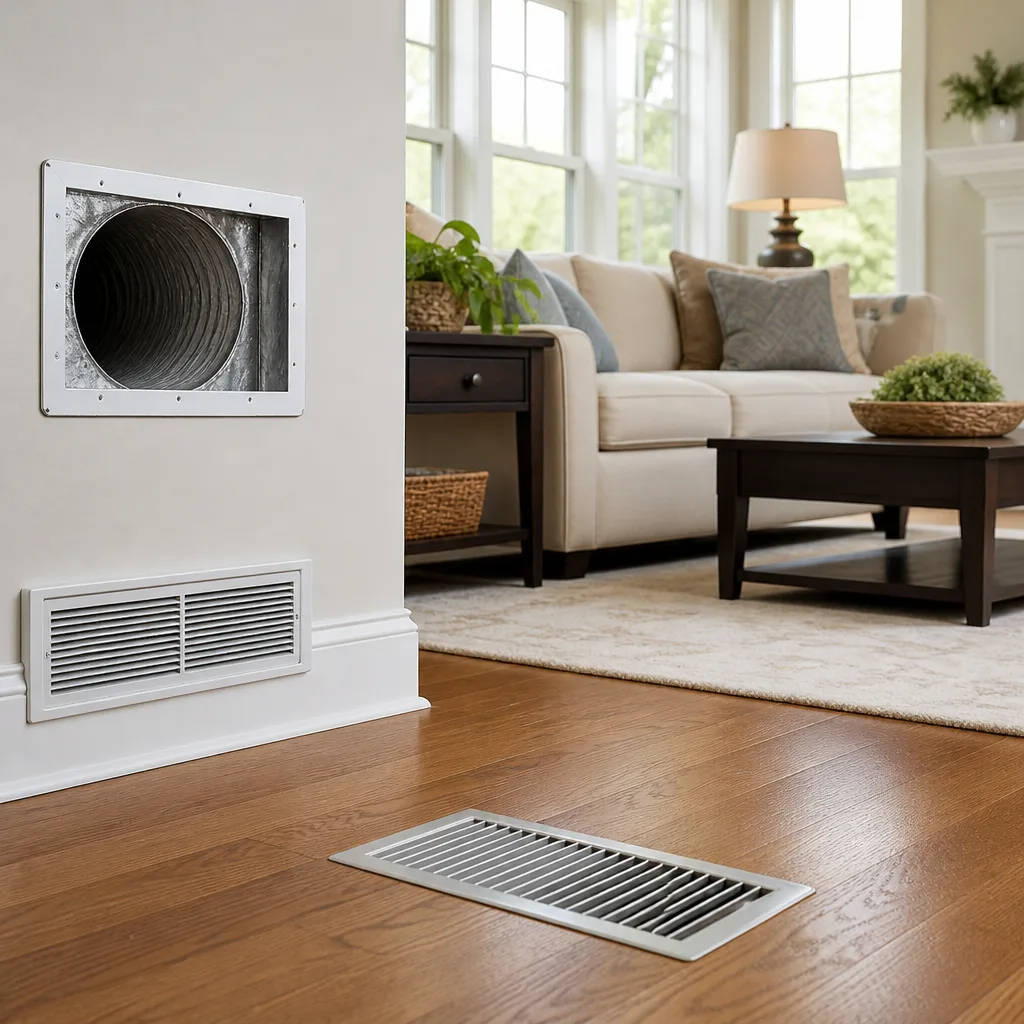 Whole-home duct cleaning
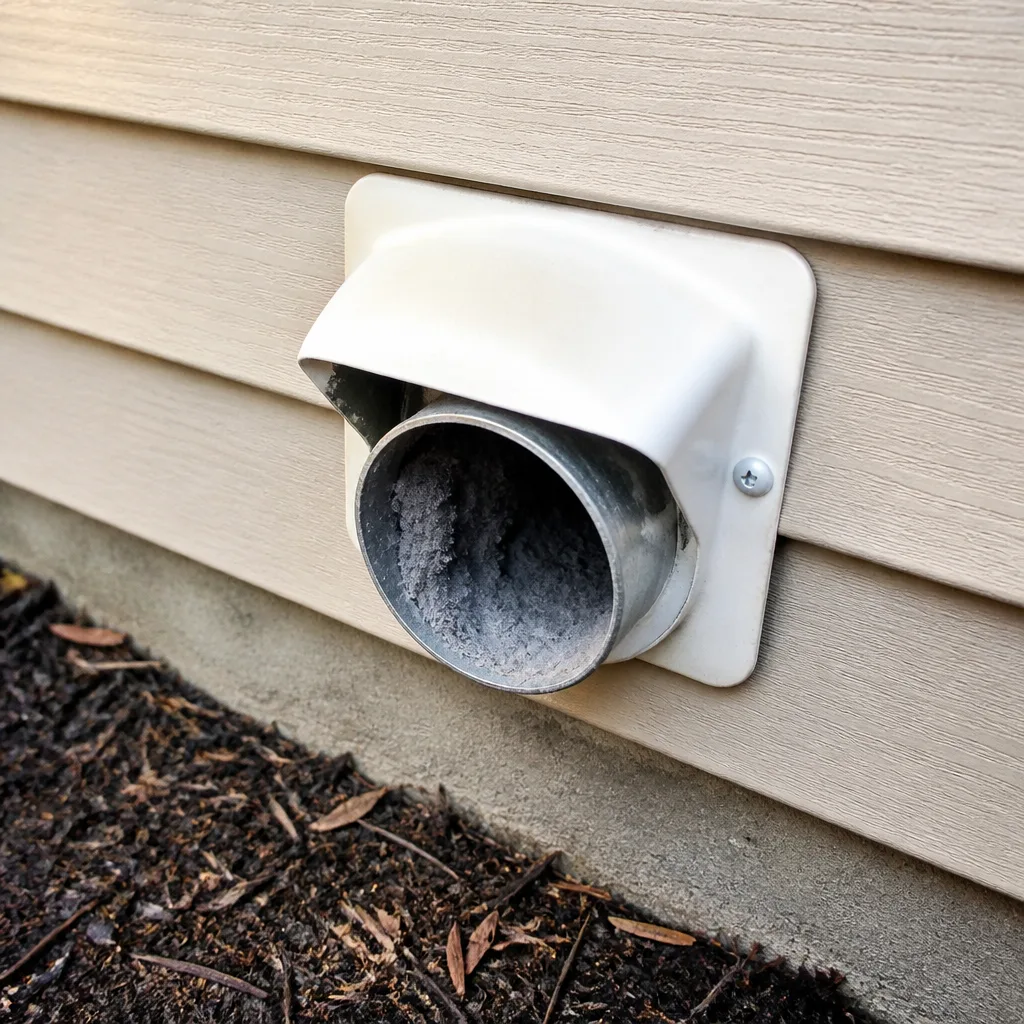 Dryer vent cleaning
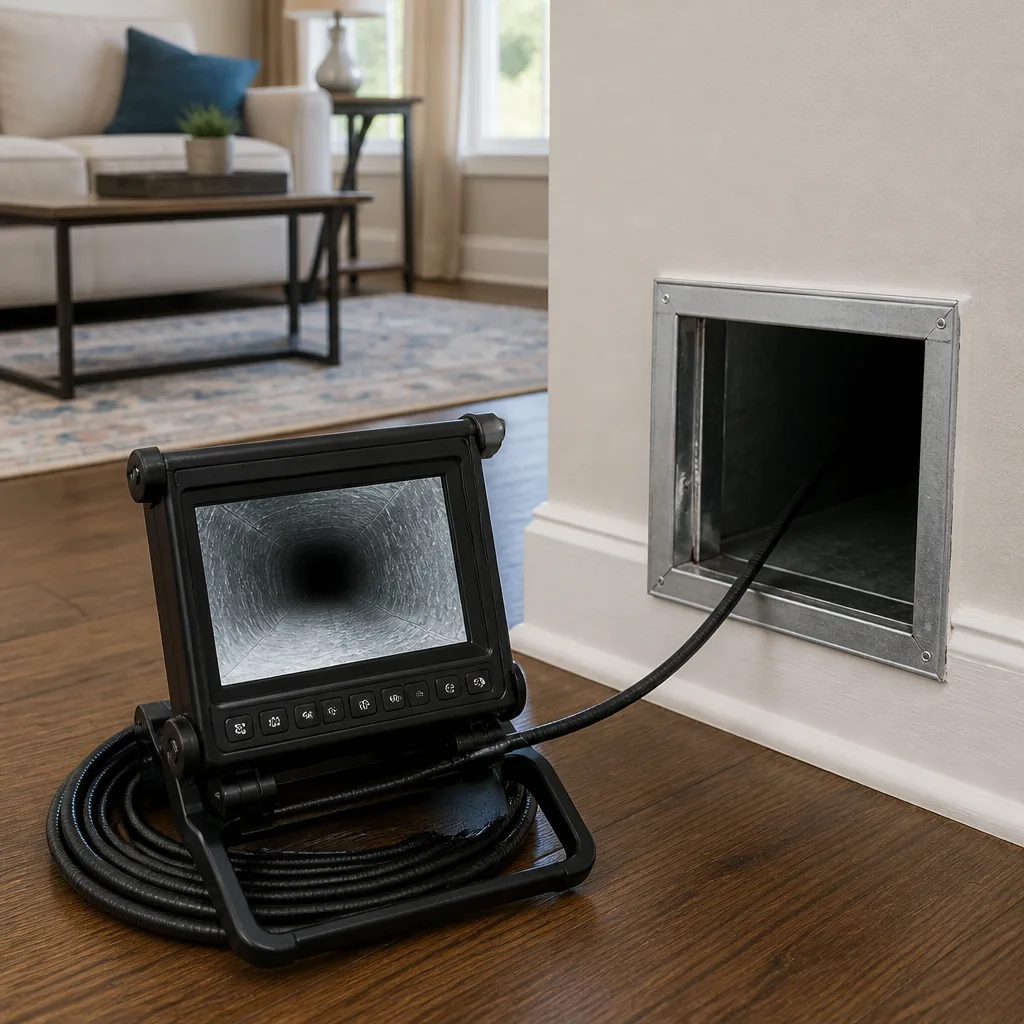 Camera inspection
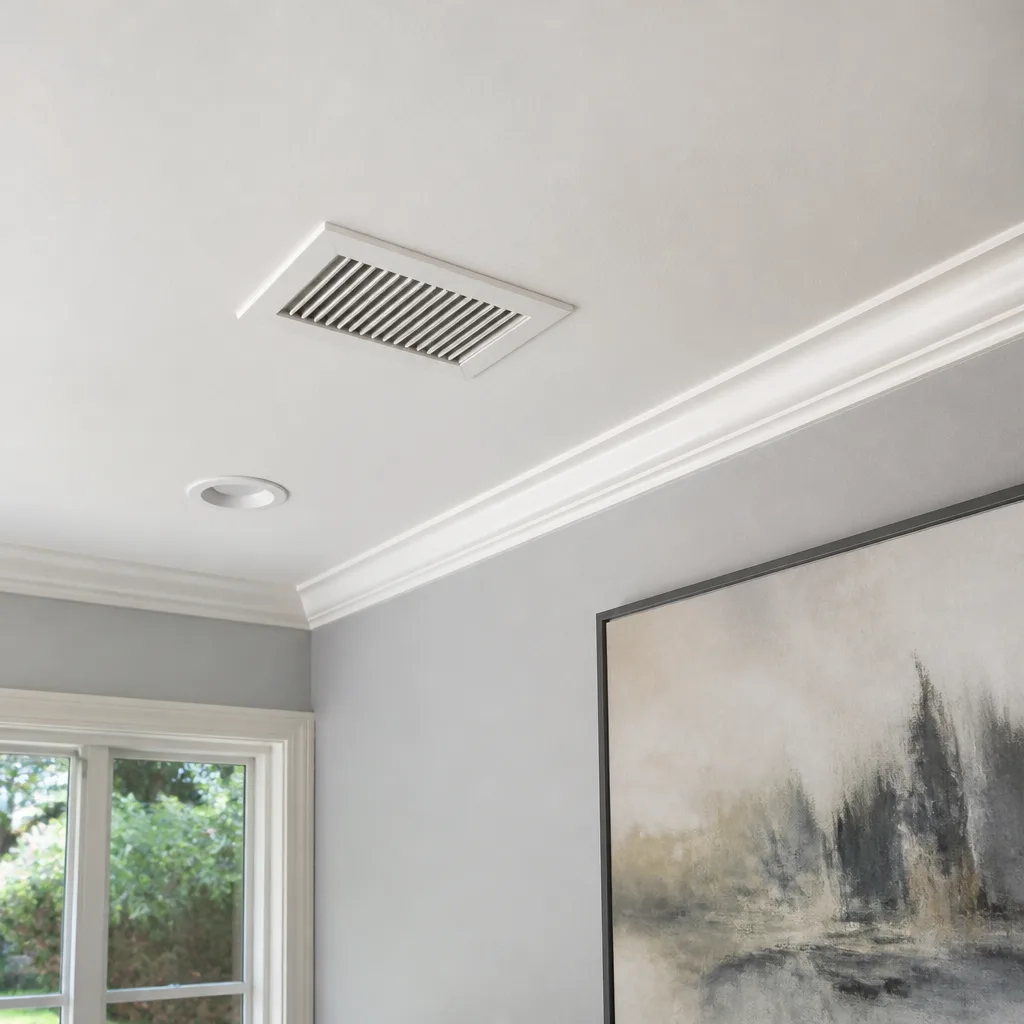 Sanitizing & deodorizing
Whole-system duct and dryer vent check with before-and-after photos - you see exactly what came out of your vents
That "$99 whole-house special" is a bait ad - the real number appears once they are in your hallway, or the "clean" is a shop-vac at the register. We photograph the inside of your ducts before and after instead.
DIY vs Professional Air Duct Cleaning: The Northeast Raleigh Homeowner’s Decision Guide
Here’s the part most homeowners don’t hear before they buy a shop-vac and a duct brush kit: the section of your duct system you can actually reach with a hose, the register boot, holds roughly 10 to 15 percent of the debris in the whole system. The blower wheel, the evaporator coil, and the main trunk lines hold the rest, and none of them are accessible without disassembly or commercial equipment. DIY duct cleaning isn’t a scam, and we won’t tell you it is. A careful homeowner really can improve an accessible register boot and swap a filter. But knowing exactly where the DIY ceiling sits is how you avoid spending $200 on tools that only reach a sliver of the problem. This guide draws that line for Northeast Raleigh homeowners, plainly and by equipment, so the decision becomes technical and financial instead of an emotional one.
Quick Answer
DIY air duct cleaning is worth doing for register grilles, accessible boots, and filter changes, but it cannot replicate negative-pressure source removal at the air handler, which is where most debris and contaminants collect. If your system has visible dust, post-renovation debris, or allergy concerns, professional cleaning with commercial-grade equipment addresses the full air pathway. For most Northeast Raleigh homes with a forced-air system and no recent service, a professional visit handles the parts you can’t reach, and DIY handles the upkeep in between.
Styles & brands we work with
- Whole-home duct cleaning
- Dryer vent cleaning
- Camera inspection
- Sanitizing & deodorizing
Table of Contents
- What DIY Duct Cleaning Actually Accomplishes
- Why Consumer Equipment Relocates Debris Instead of Removing It
- When DIY Is the Right Call
- When Professional Equipment Is Non-Negotiable
- The Cost Comparison: DIY Tools vs Professional Cleaning in Northeast Raleigh
- What a Full Air Pathway Cleaning Covers
- Your System and Your Home: Northeast Raleigh Climate and Housing
- How to Prepare Before You Call Anyone
What DIY Duct Cleaning Actually Accomplishes
DIY addresses a specific, useful slice of the system: the parts you can see and reach. That’s the register grille, the boot where the duct meets the floor or wall, and any straight run you can feed a hose into through a vent. For a home that’s already been professionally cleaned or recently serviced, that slice is often enough to keep things tidy between deeper visits.
Here’s what a homeowner with reasonable tools can genuinely do:
- Register grille cleaning. Removing the grille and washing it in a sink or outside with a hose clears surface dust and lint that collects on the louvers. This is the most visible improvement and the easiest.
- Accessible boot vacuuming. With the grille off, a vacuum hose can reach into the boot, the short transition between the register and the main duct branch, and pull out loose debris.
- Filter replacement. A clean filter is the single highest-value maintenance task in any forced-air system, and it happens to be one a homeowner can do alone. Check it monthly during heavy-use months.
- Visual inspection with a borescope. A handheld boroscope camera, often $30 to $80, lets you look down a branch line and see what’s actually there. We recommend this before you spend anything on cleaning tools, because it tells you whether you have a problem worth addressing.
A realistic DIY kit looks like this: a HEPA-rated shop-vac ($80 to $150), a register brush or a flexible duct brush ($20 to $40), a borescope ($30 to $80), and a supply of filters ($15 to $30 each). That’s $150 to $300 for the initial investment, and it covers the 10 to 15 percent of the system that’s accessible. It’s a fair trade if your goal is cosmetic tidiness. It’s not a fair trade if your goal is a clean system.
Why Consumer Equipment Relocates Debris Instead of Removing It
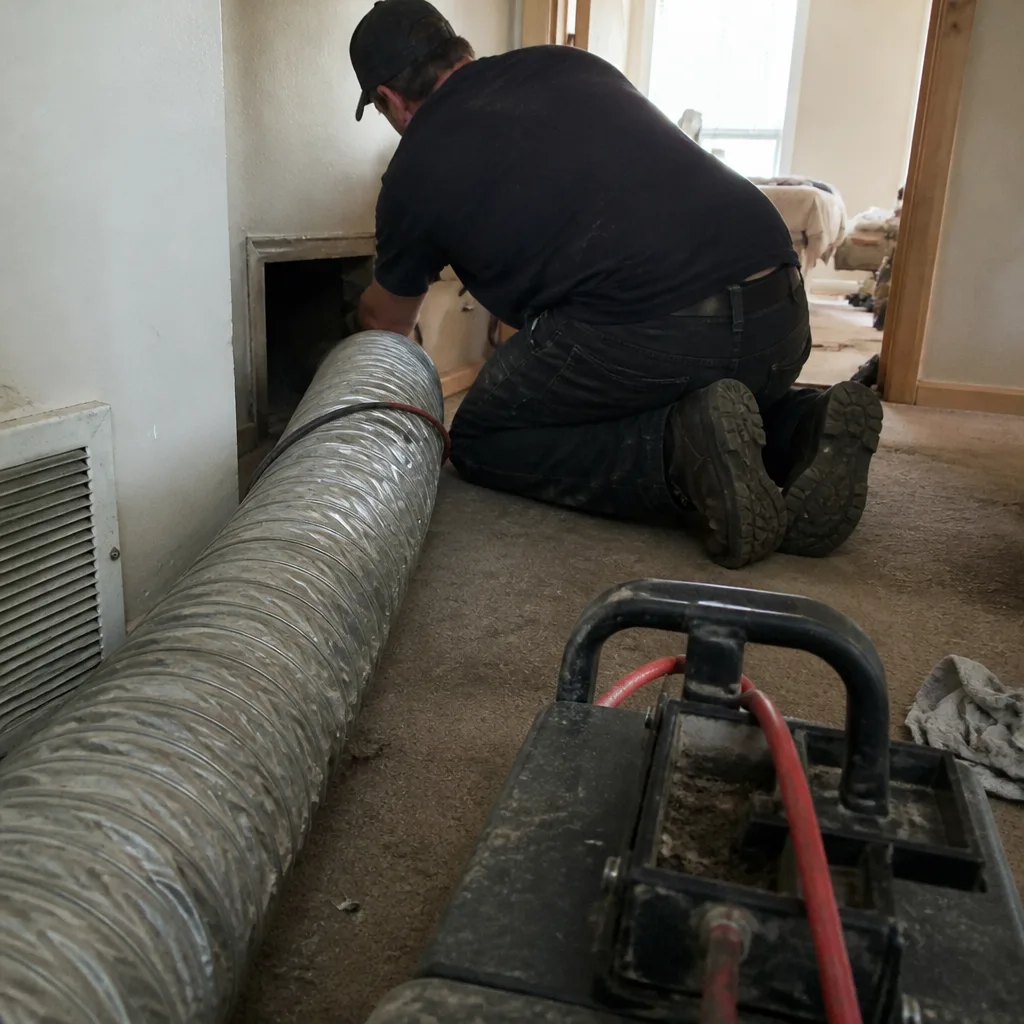
This is the physics part, and it matters. Professional duct cleaning works on a principle called negative-pressure source removal. A powerful vacuum unit is connected at the air handler or a main trunk access point, and it pulls the entire system into negative pressure. While that vacuum is running, the technician agitates the duct walls with a rotary brush, knocking loose debris into an air stream that’s moving toward the vacuum, not into the living space. Contaminants get captured and carried out.
A homeowner with a shop-vac at one end and a leaf blower at the other is doing something different. The blower pressurizes the duct, loosening debris, but there’s no matching negative pressure to capture it. So the debris doesn’t leave the system. It travels. Some of it lands in another room’s register. Some gets pulled back through the return and settles on the blower wheel or the evaporator coil. Some blows into the living space as a puff of dust when the system kicks on.
- No containment. Consumer vacuums capture what they pull in but don’t hold the whole system under negative pressure, so loosened debris escapes elsewhere.
- No rotary agitation. Shop-vac hoses pull loose dust. They don’t scrub the duct wall, and duct walls are where the fine, sticky particles bond.
- No HEPA filtration on most units. Standard shop-vacs exhaust fine particulate back into the room, which is the opposite of what an allergy sufferer wants.
- Blower wheel and coil never get touched. These are the parts that most degrade efficiency, and they require disassembly to reach.
In our experience, homeowner-grade equipment applied to a whole system often leaves the duct network measurably dirtier where it counts, because the debris has been redistributed onto surfaces that are harder to clean. The right setup for actual removal involves commercial rotary-brush systems like Rotobrush, HEPA-filtered negative-pressure units like Nikro, and remediation-grade capture equipment for homes with heavy allergen loads. That’s a different class of hardware than a shop-vac, and it exists for a reason.
When DIY Is the Right Call
DIY is legitimate in a handful of specific situations. We’ll name them plainly, because telling you never to touch your own ductwork is not useful advice, and it isn’t honest either.
1. Post-move-in cosmetic cleaning of a recently serviced system
If you just bought a home and the prior owner had the ducts professionally cleaned within the last year or two, the system is genuinely clean. What you have is register dust, filter dust, and boot lint. Cleaning the grilles and vacuuming the boots is a reasonable weekend task. Replacing filters is required. Skip the deep clean for now.
2. Maintenance between professional visits
Between full cleanings, you can absolutely keep grilles and boots clean, swap filters on schedule, and check the return grille for buildup. This is maintenance, not remediation. It extends the life of a professional cleaning.
3. Dryer vent clearing on short straight runs
If your dryer vent runs a short, straight path to the exterior wall, you can clear lint with a vent brush kit and a shop-vac from the outside. This is a real fire-safety task and worth taking seriously: lint accumulation in dryer vents is a leading cause of residential house fires. If the run is long, has bends, or goes up through a wall or roof, that’s when a professional dryer vent cleaning matters, because a hand brush won’t clear a compressed lint pack around a 90-degree turn.
4. Boaroscope inspection before you pay for anything
Pulling a borescope camera through a vent to look at the duct interior is the most useful thing a homeowner can do before spending money. It tells you whether the ducts are actually dirty or whether the dust you’re seeing is just register-level. We recommend it regardless of which path you choose.
When Professional Equipment Is Non-Negotiable
Some conditions put you past the DIY ceiling entirely. In these cases, consumer equipment doesn’t just underperform; it can make the situation worse or leave a real hazard in place. Here are the conditions we consider non-negotiable.
- Post-renovation debris. Drywall dust, sawdust, and construction grit coat the entire duct system after a remodel. It’s fine particulate that fouls blower wheels and coils, and it’s concentrated in exactly the trunk lines a shop-vac can’t reach. Professional cleaning after a renovation is essentially required to protect the HVAC equipment.
- Visible biofilm on the coil or drain pan. If you’ve looked at the evaporator coil area (some air handler cabinets have a sight glass or panel) and seen dark, sticky material, that’s microbial growth. It needs remediation-grade capture, not a shop-vac pass. Abatement Technologies equipment exists for exactly this: fine particulates and biological material get captured under containment instead of aerosolized into the room.
- Rodent evidence. Droppings, nesting material, or gnawed flex duct in the system is a professional call. The debris is a health hazard, and the duct itself may need repair or replacement, which consumer tools cannot provide.
- Flex duct with accumulated debris in low-slope sections. Flex duct often sags between hangers, creating low points where debris collects into dense packs. A brush can’t safely navigate the corrugations, and a shop-vac hose can’t reach around the sag. Rotary-brush systems are designed for this geometry.
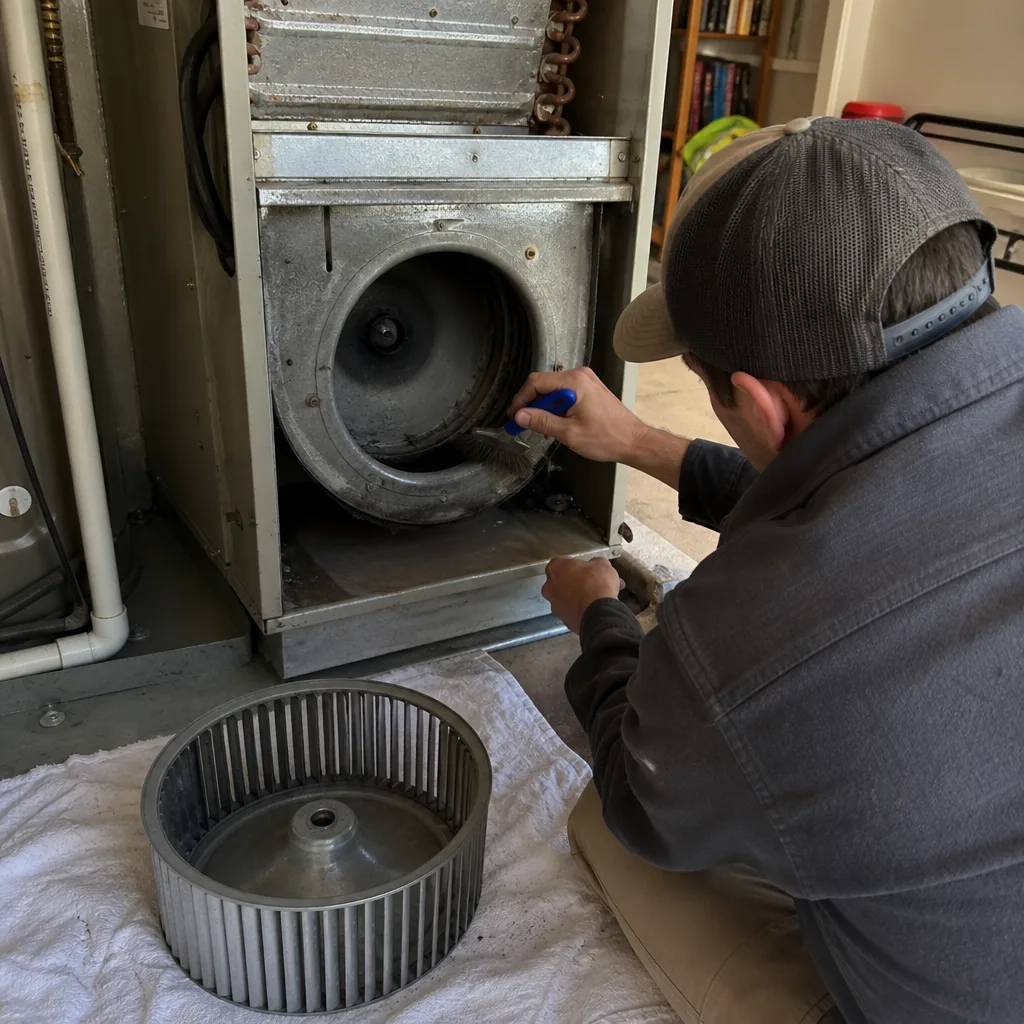
- Blower wheel and coil cleaning. Every forced-air system has a blower wheel and an evaporator coil that accumulate dust and restriction. Cleaning them requires disassembly of the air handler. This is the single biggest efficiency gain from a professional visit, and it’s outside the reach of any homeowner tool kit.
For Northeast Raleigh homes with pets, allergy sufferers, or an HVAC system that’s more than a decade old, these conditions are more common than you’d expect. That’s not because Northeast Raleigh is uniquely dusty; it’s because the same factors show up in forced-air homes everywhere and simply accumulate with time.
The Cost Comparison: DIY Tools vs Professional Cleaning in Northeast Raleigh
Let’s put actual numbers next to each other, because the financial part of this decision deserves the same honesty as the technical part. The table below gives typical ranges for a Northeast Raleigh home; the written estimate from a professional job will state the final price for the work.
| Approach | Typical cost | What it actually remediates |
|---|---|---|
| DIY tool kit (one-time) | $150 – $300 | Register grilles, accessible boots, filter replacement, visual inspection |
| DIY consumables (per year) | $40 – $100 | Filters, brush replacements, shop-vac bags |
| Professional full-system cleaning | $350 – $600 | Register grilles, boots, trunk lines, blower wheel, evaporator coil, negative-pressure capture, sanitizing |
| Professional + dryer vent cleaning | $450 – $750 | All of the above plus dryer vent lint removal and airflow verification |
Look at the third column. The DIY kit’s $150 to $300 buys you access to maybe 15 percent of the system. The professional job’s $350 to $600 buys you the other 85 percent, which is where the dust actually lives and where the efficiency losses come from. If your ducts are genuinely dirty, DIY is the more expensive route per square foot of duct actually cleaned. If your ducts are clean and you’re just tidying up, DIY is the more sensible choice, and you can spend that $350 on something else.
The professional side has other cost dimensions worth knowing. If your duct system needs sealing because a register isn’t delivering proper airflow, or if flex duct has come loose at a joint, that’s included in a proper duct repair and sealing service, which is one of the five core categories we work in. Whole-home filtration recommendations using Aprilaire or Honeywell systems are another thing a professional can assess on-site, but they’re a considered upgrade, not a required add-on for a basic cleaning. We recommend cleanings and sanitizing as logical next steps rather than upsells; cleaning removes what’s there, and sanitizing addresses what cleaning leaves behind.
What a Full Air Pathway Cleaning Covers
The phrase “full air pathway” is worth unpacking, because it’s what separates a real cleaning from a register-and-grille pass. The air pathway is everything the supply air flows through from the air handler to your room, plus the return air path that carries it back. That’s a lot more than the vents you can see.
- Supply plenum and main trunk. The rigid ductwork closest to the air handler. Typically the dirtiest section of the system, because it sees the full air volume and captures anything the filter misses.
- Branch runs. The smaller ducts feeding individual rooms. These are where flex duct sag and accumulated debris are commonly found.
- Register boots and grilles. The transition to your living space. DIY can handle this layer; the professional handles the layers above it.
- Return air path and return trunk. The dust that hits your filter actually arrives from here first. A dirty return trunk is why filters load fast.
- Blower wheel and evaporator coil. The heart of the air handler. Dust on the blower wheel reduces airflow directly; dust on the coil reduces heat transfer. Neither is reachable without disassembly.
- Drain pan and condensate line. Coil cleaning and drain pan cleaning go together; a pan with biofilm buildup is a source of odor and microbial release.
For Northeast Raleigh homes, this full pathway scope is the standard we work to, and it’s accessible to any homeowner who wants to know what to expect: air duct cleaning in Northeast Raleigh covers the entire pathway as a single service, with before-and-after inspection photos so you can see the work rather than take it on faith. That’s the strongest way to close the verification question, and it’s the same standard used across the broader air duct cleaning and HVAC cleaning services.
Your System and Your Home: Northeast Raleigh Climate and Housing
Northeast Raleigh sits in the Piedmont, which means hot, humid summers and mild winters. For a forced-air system, that climate creates a specific pattern of dust and moisture problems worth understanding because it shapes what your duct cleaning actually needs to accomplish.
Long cooling seasons mean the evaporator coil runs wet for months at a time. A coil that stays damp is a surface where biological growth can establish, especially if the filter is poorly maintained or the drain pan doesn’t fully empty. That’s the difference between a duct system that holds dust in the winter and one that holds dust plus microbial growth in the summer. If you’ve noticed a musty smell when the system first kicks on, that’s the coil and drain pan talking, and it’s not something a shop-vac pass fixes.
The housing stock in Northeast Raleigh adds its own factors. The area has a mix of older neighborhoods and newer construction, which means two very different duct conditions coexist:
- Older homes often have rigid metal ductwork, sometimes with original insulation that has settled or failed. Duct sealing becomes a real consideration because a leaky trunk can pull attic or crawlspace air into the supply stream.
- Newer construction typically uses flex duct, which is efficient when installed correctly but prone to sagging and joint separation. Post-construction debris from the building process is common in the first year of ownership, particularly if landscaping or interior finishing ran concurrently with HVAC commissioning.
- Renovations in either kind of home, kitchen or bath remodels especially, dump large loads of fine particulate into the system. This is the most common reason a Northeast Raleigh homeowner ends up calling us sooner than expected.
The good news is that the same cleaning approach works across the housing types. What changes is the emphasis: older homes benefit more from duct repair and sealing; newer homes benefit more from debris removal and filtration improvements. A technician with up to 13 years of experience will typically assess both on a first visit.
How to Prepare Before You Call Anyone
The most useful thing a homeowner can do before booking a cleaning is to gather information that makes the visit more effective. Here’s a short number list.
- Check your filter. If it’s dark or clogged, change it before the cleaning, not after. Clean ducts plus a dirty filter is a wasted cleaning.
- Pull a borescope down one branch run. Look for the depth of dust on the duct wall. If there’s a visible coating of fine dust more than a light film, that’s debris worth addressing.
- Note any odors. A musty smell when the system starts, or a chemical smell near the air handler, is important information. It suggests coil or drain pan issues that need to be part of the visit.
- Note any recent renovations. Drywall and remodel debris changes the scope significantly. Tell the technician when it happened.
- Check dryer vent run length. If you’re considering dryer vent cleaning at the same time, know how long and how many bends the vent run has. That determines whether it can be cleared with a hand tool or needs equipment.
- Check for pets. Pet hair binds to duct walls differently than drywall dust and often needs brush agitation to remove. Tell the technician if you have animals.
This preparation isn’t required to book a visit, but it makes the conversation with a technician sharper, and it helps you judge a written estimate against the actual conditions in your home.
Common Mistakes to Avoid
- Assuming a cheap coupon equals a full cleaning. Some low headline prices cover only register grilles, which is the 15 percent you could clean yourself. Ask the technician what scope is included before you book.
- Using a leaf blower inside ductwork. It loosens debris without any negative-pressure capture, and the debris ends up on the blower wheel and coil. This is one of the most common DIY mistakes we see in Northeast Raleigh homes.
- Skipping the borescope inspection before spending money. A $30 camera tells you whether your ducts are actually dirty. Without it, you’re guessing.
- Cleaning ducts and not replacing the filter. A dirty filter immediately re-contaminates the cleaned system. Filter replacement is part of the job, not an optional add-on.
- Ignoring a musty smell from the air handler. A musty smell when the system kicks on points to coil or drain pan growth and needs professional remediation, not a shop-vac. Consumer cleaning can aerosolize microbial material.
- Treating a long, bent dryer vent as a DIY job. If lint is packed around a 90-degree turn, a hand brush cannot clear it, and the fire risk stays in place. Short straight runs are fine for DIY; complex ones are not.
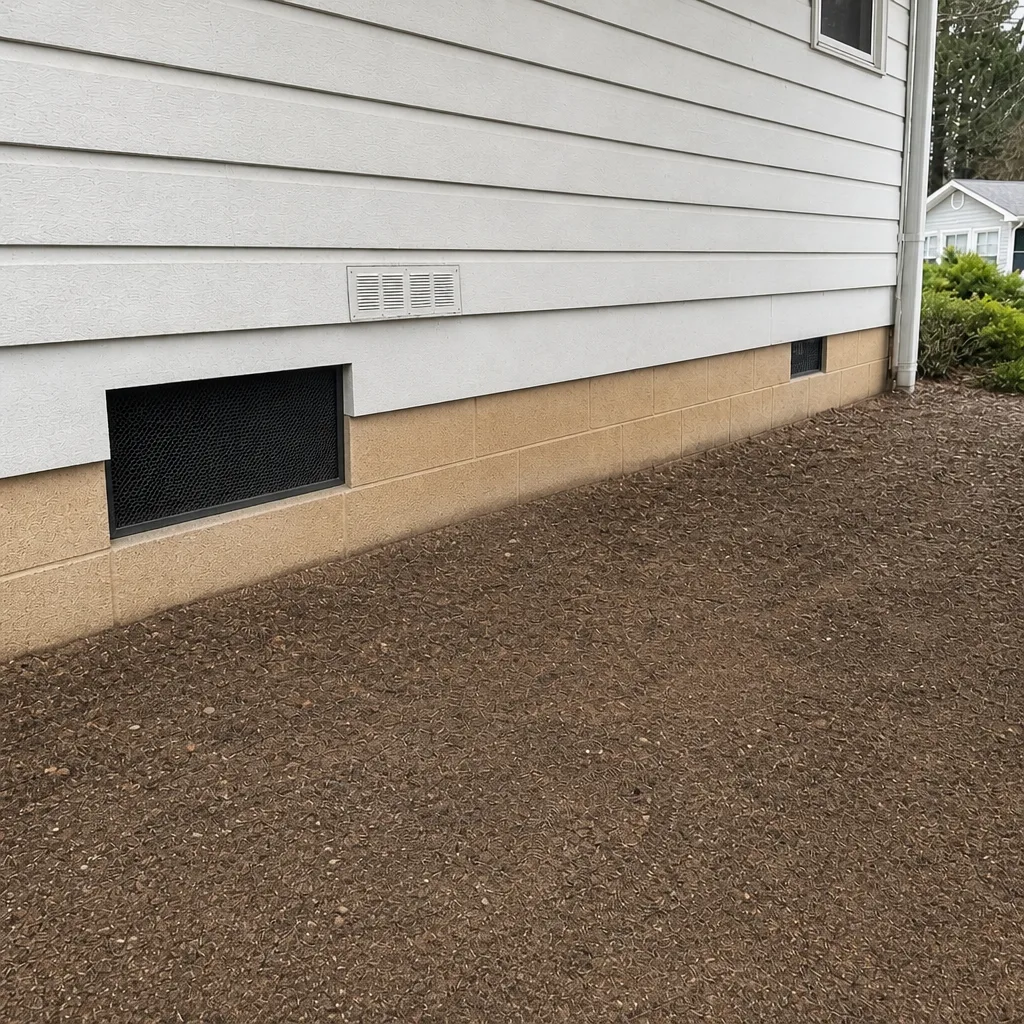
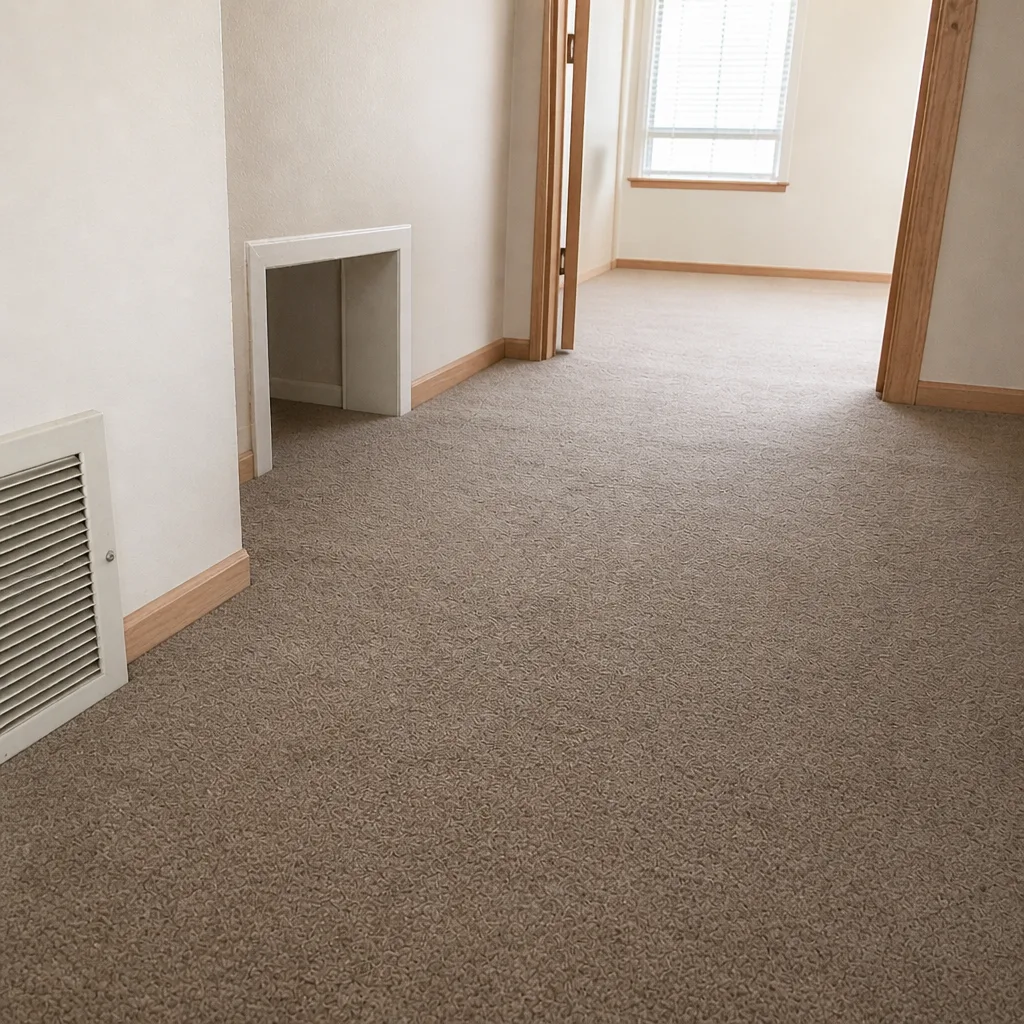
- Not asking for before-and-after photos. The single best way to verify the work actually happened is to see it. Any professional cleaning should include documentation. Ask before you book.
See the difference
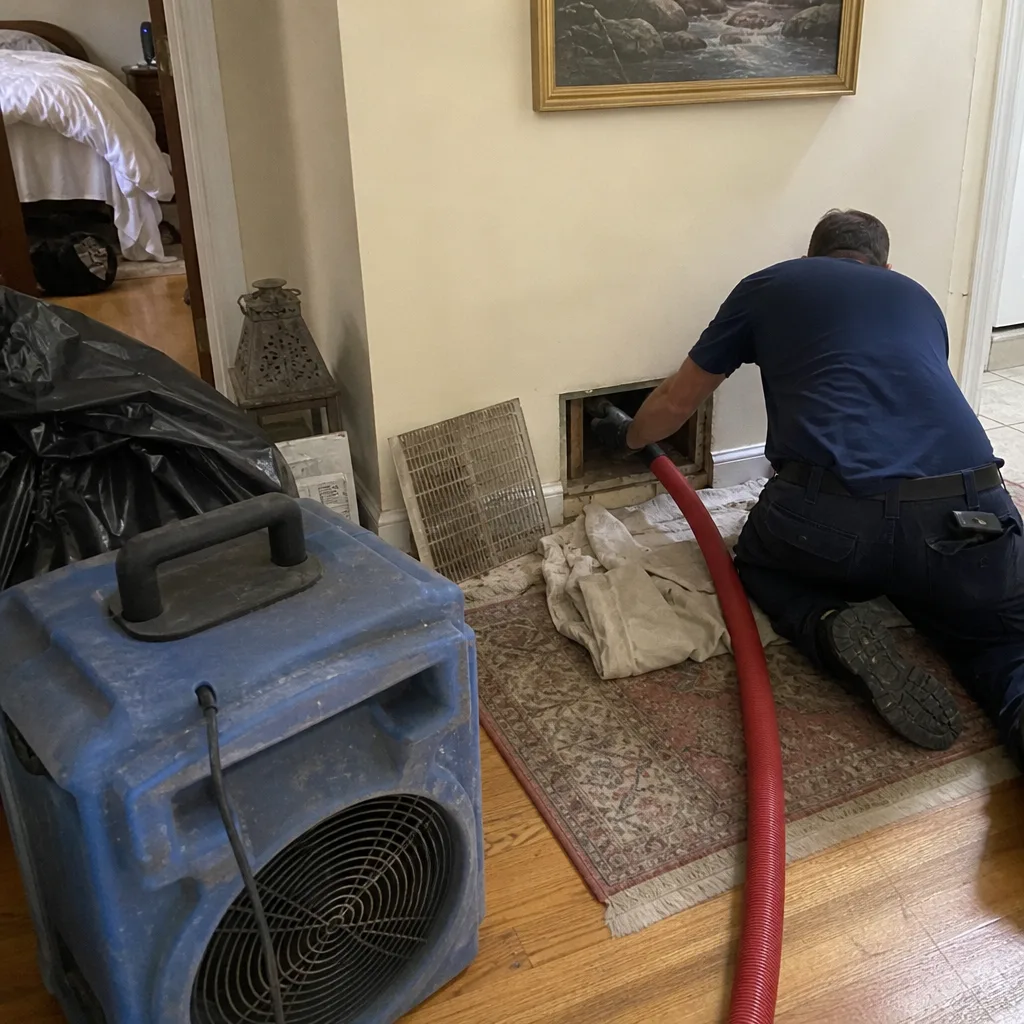 Before
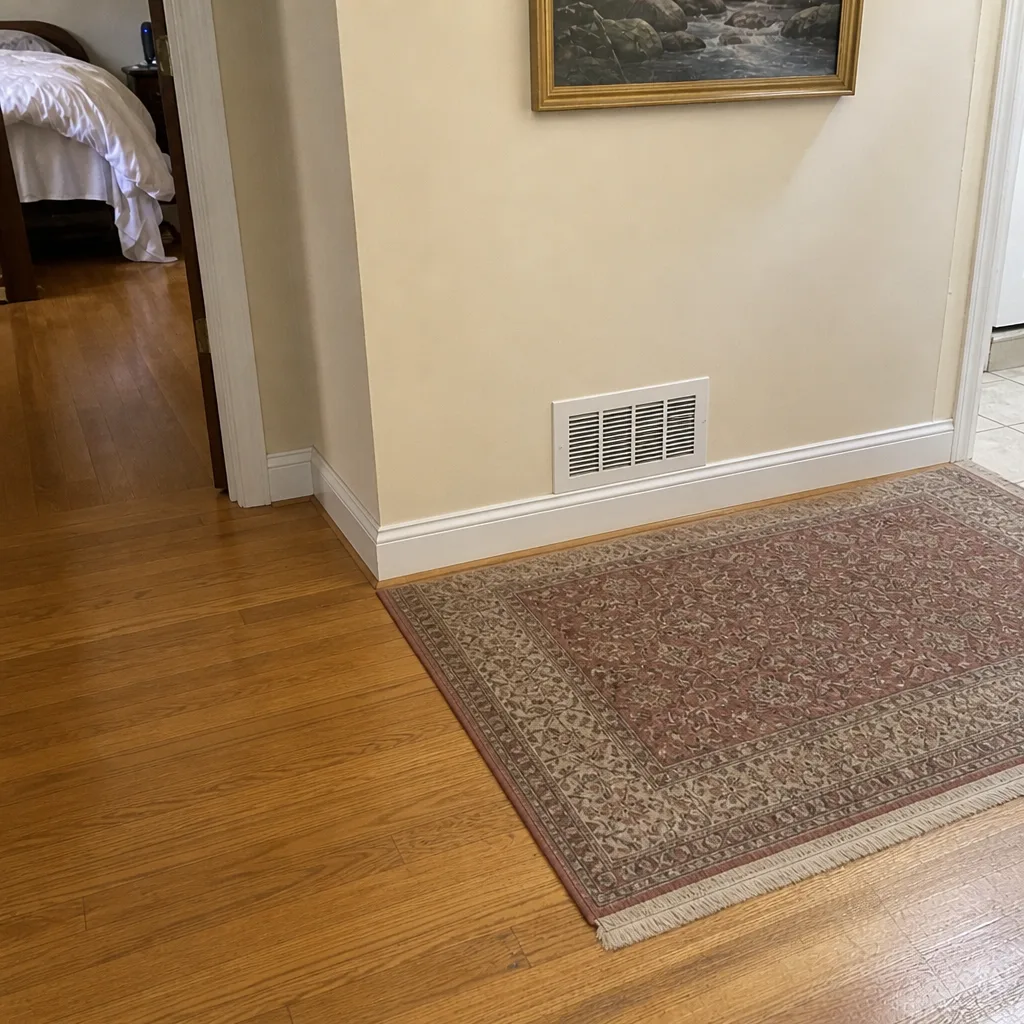 After
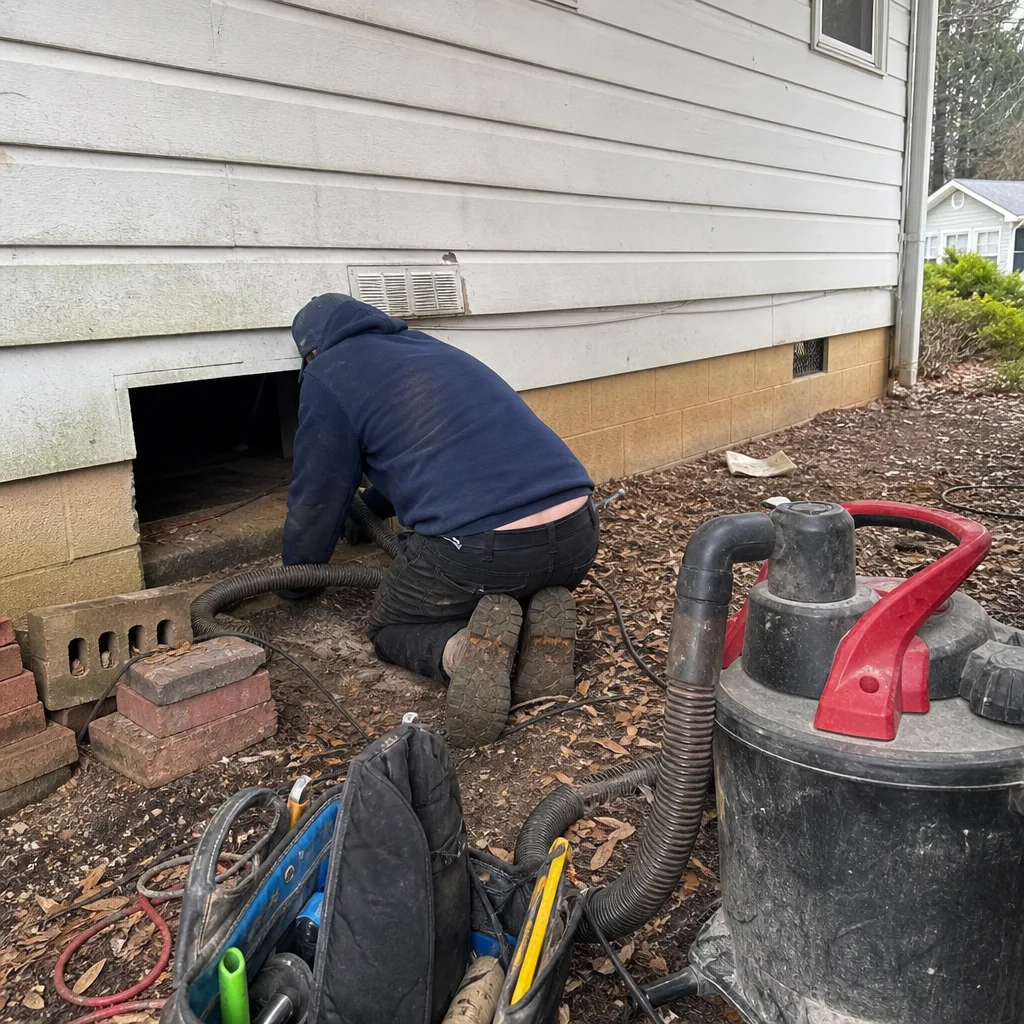 Before
 After
 Before
 After
When to Call a Professional
Call a professional if any of the following applies: you’ve recently completed a renovation, you’ve spotted visible biofilm on the coil or drain pan, you’ve found rodent evidence in the ductwork, your flex duct has sagged into low-slope sections with accumulated debris, your system is producing a musty smell, or your HVAC is older than a decade and hasn’t been cleaned. Also call if you’ve just moved into a Northeast Raleigh home with no service history, or if you have allergy symptoms that seem tied to the HVAC system. Air Duct Cleaning Northeast Raleigh offers free estimates in Northeast Raleigh. Call (833) 350-5194. We answer 24/7. Fast dispatch from 7am to 7pm, Sunday through Friday.
Frequently Asked Questions
Professional air duct cleaning in Northeast Raleigh typically runs $350 to $600 for a full-system cleaning, depending on the number of vents, system size, and condition. Add dryer vent cleaning and the range is $450 to $750. The written estimate states the final price, and an honest one is based on your home, not a coupon. Call (833) 350-5194 for an exact quote; estimates are free.
Cheap quotes usually cover less work: register grilles only, no trunk lines, no blower wheel or coil cleaning, no negative-pressure containment. A “cheap” duct cleaning that skips the main trunk and air handler is only addressing the 15 percent you could do yourself. Ask what scope is included before you compare prices. Call (833) 350-5194 for a free estimate that lists what the price covers.
Before-and-after photos from inside your own ducts are the standard to ask for. A technician should be able to show you the state of the duct wall before and after cleaning, plus the blower wheel and coil if they were cleaned. If a provider can’t show you documentation, that’s your answer. Call (833) 350-5194 and we’ll walk you through what you’ll receive.
Most homes need professional duct cleaning every three to five years. If you have pets, allergies, or recently renovated, you may need it more frequently. Between professional visits, DIY register cleaning and regular filter changes are genuinely useful. Call (833) 350-5194 for an exact recommendation for your home; estimates are free.
You can clean register grilles and accessible boots with a HEPA shop-vac, and that’s genuinely useful maintenance. You cannot clean the blower wheel, evaporator coil, or main trunk lines without disassembly and negative-pressure equipment. A shop-vac alone addresses roughly 10 to 15 percent of the system. Call (833) 350-5194 if you want to know what the rest of the system needs.
Yes, if the renovation involved drywall work, sanding, or significant dust. Drywall dust and construction grit coat the trunk lines and blower wheel in ways consumer equipment cannot reach, and it accelerates blower motor wear. Professional cleaning removes it before it becomes a long-term efficiency problem. Call (833) 350-5194 for a free estimate.
The Bottom Line
DIY duct cleaning has a real place: register grilles, accessible boots, filter changes, borescope inspection, and short dryer vent runs. Those tasks cost $150 to $300 in tools, and they’re worth doing. Everything above the boot, which is roughly 85 percent of the debris in the system, requires negative-pressure source removal and disassembly to reach. That means a professional visit, typically $350 to $600 for a Northeast Raleigh home. The right decision isn’t a matter of loyalty to either path; it’s a matter of matching the tool to the task. If your ducts are genuinely dirty, DIY is the more expensive choice per duct cleansed. If they’re clean and you’re maintaining them, DIY is sensible. If you’re not sure which category you’re in, pull a borescope down one vent and look. That $30 investment is the first thing any homeowner should do.
Ready for a professional assessment? Call Air Duct Cleaning Northeast Raleigh at (833) 350-5194 for a free estimate. We answer 24/7. Fast dispatch from 7am to 7pm, Sunday through Friday. Every estimate is free, every price is set per job by the written estimate, and every cleaning comes with before-and-after photos of your own ducts.
Written by the team at Air Duct Cleaning Northeast Raleigh.