
Last updated November 23, 2026
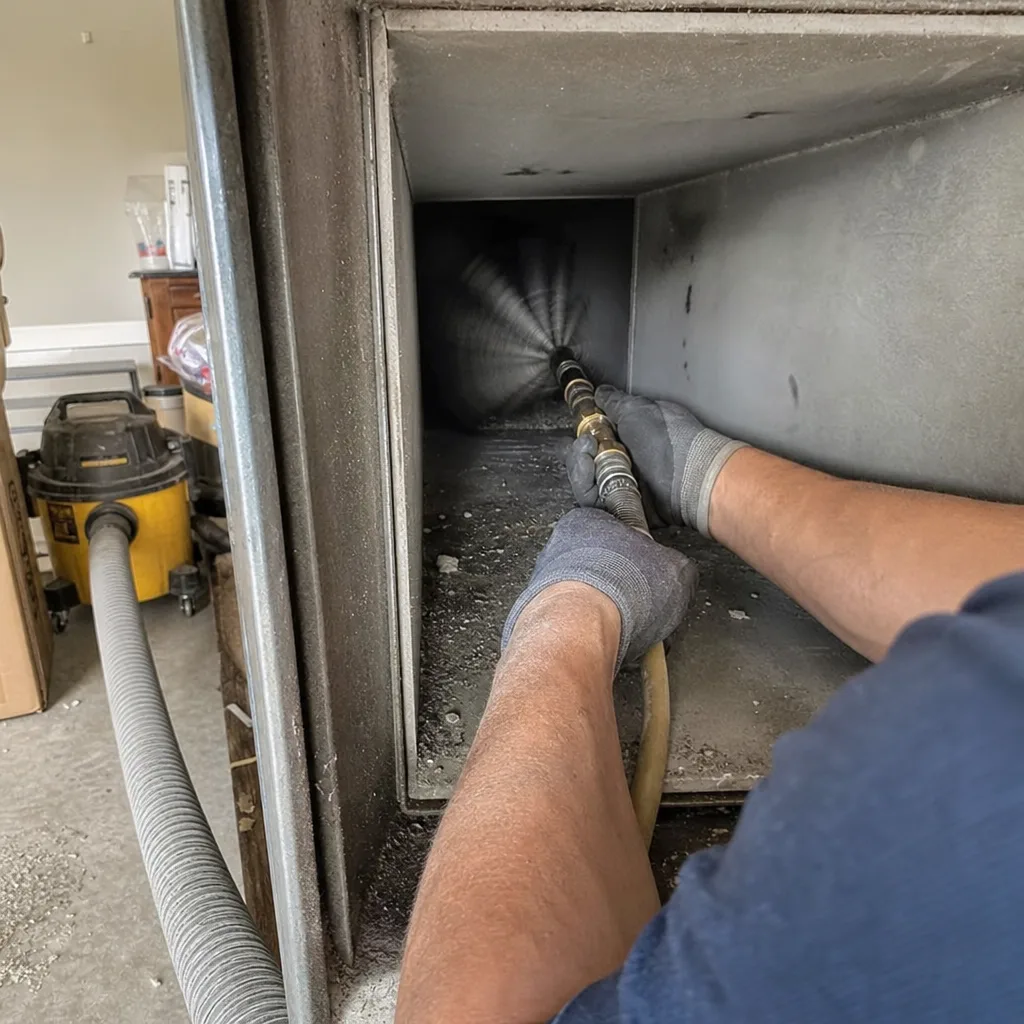
 Whole-home duct cleaning
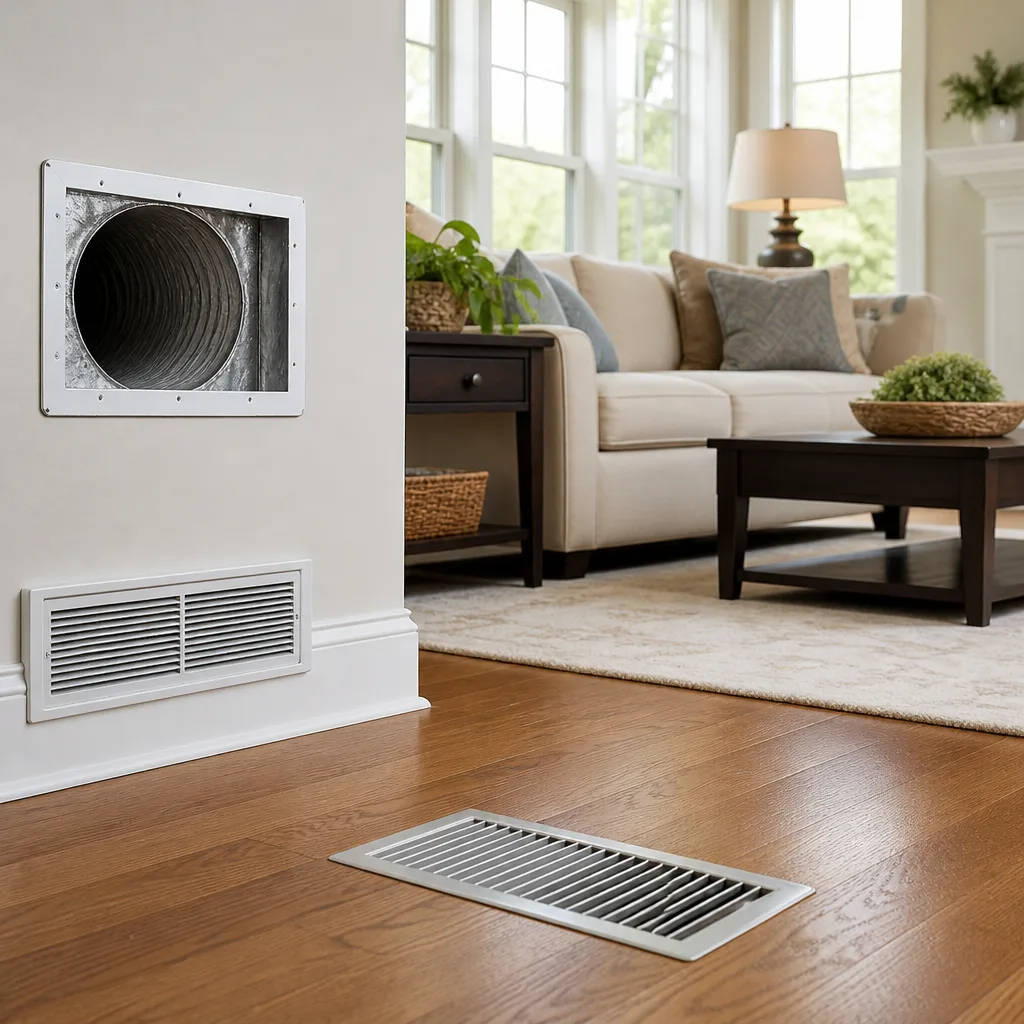
 Dryer vent cleaning
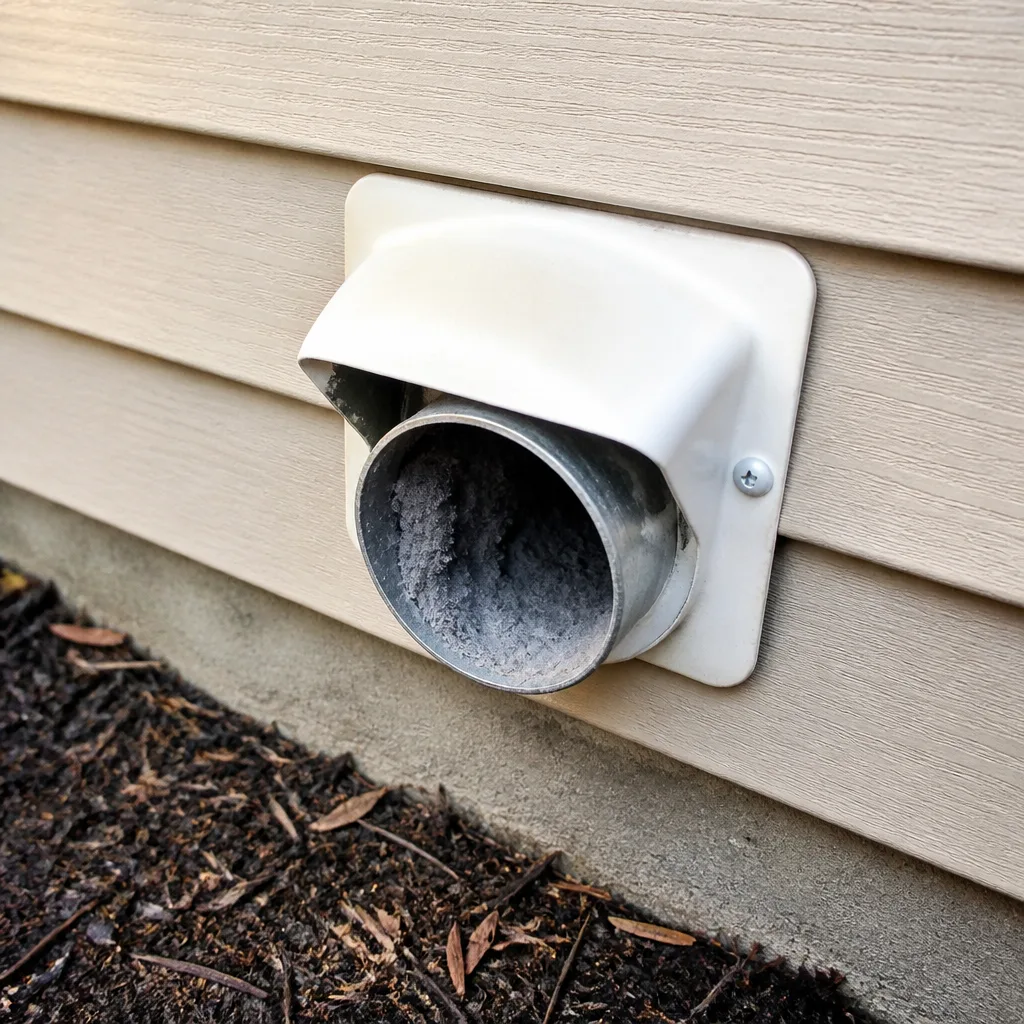
 Camera inspection
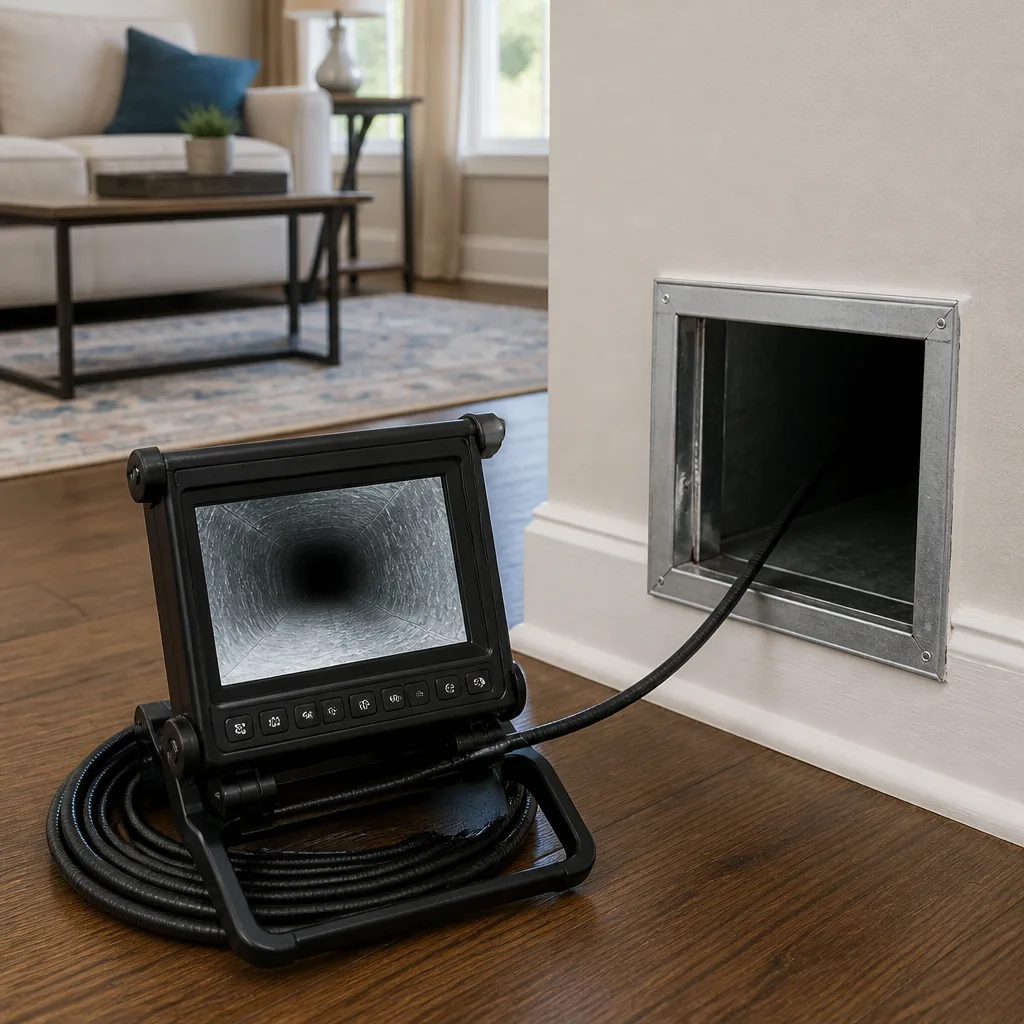
 Sanitizing & deodorizing
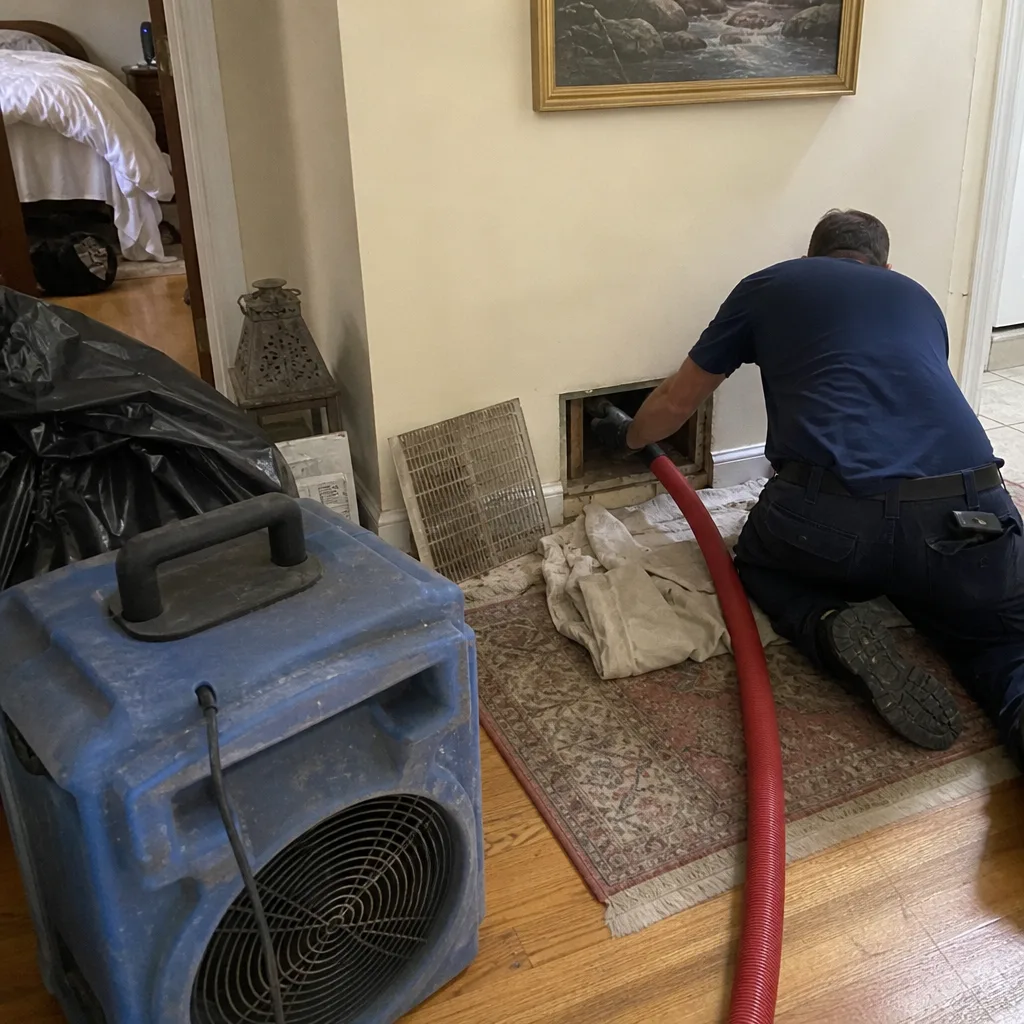
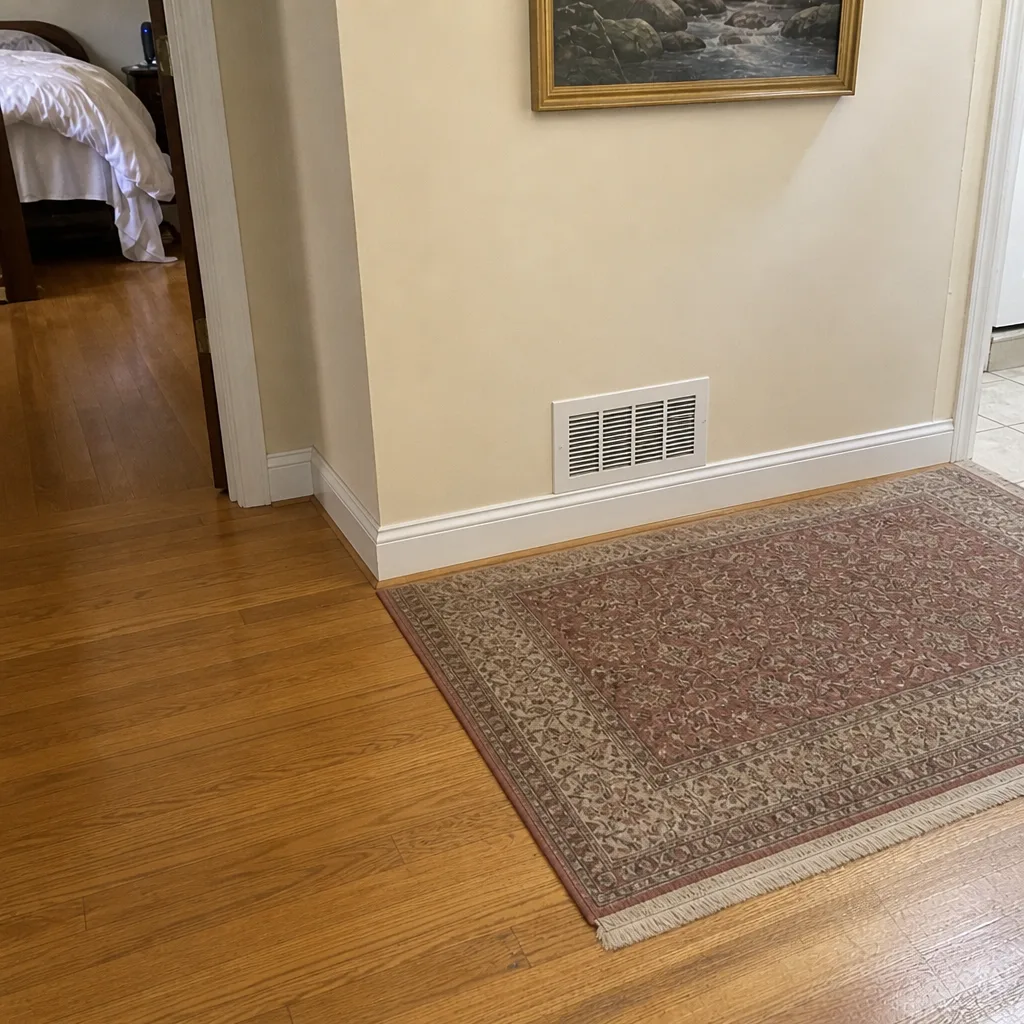
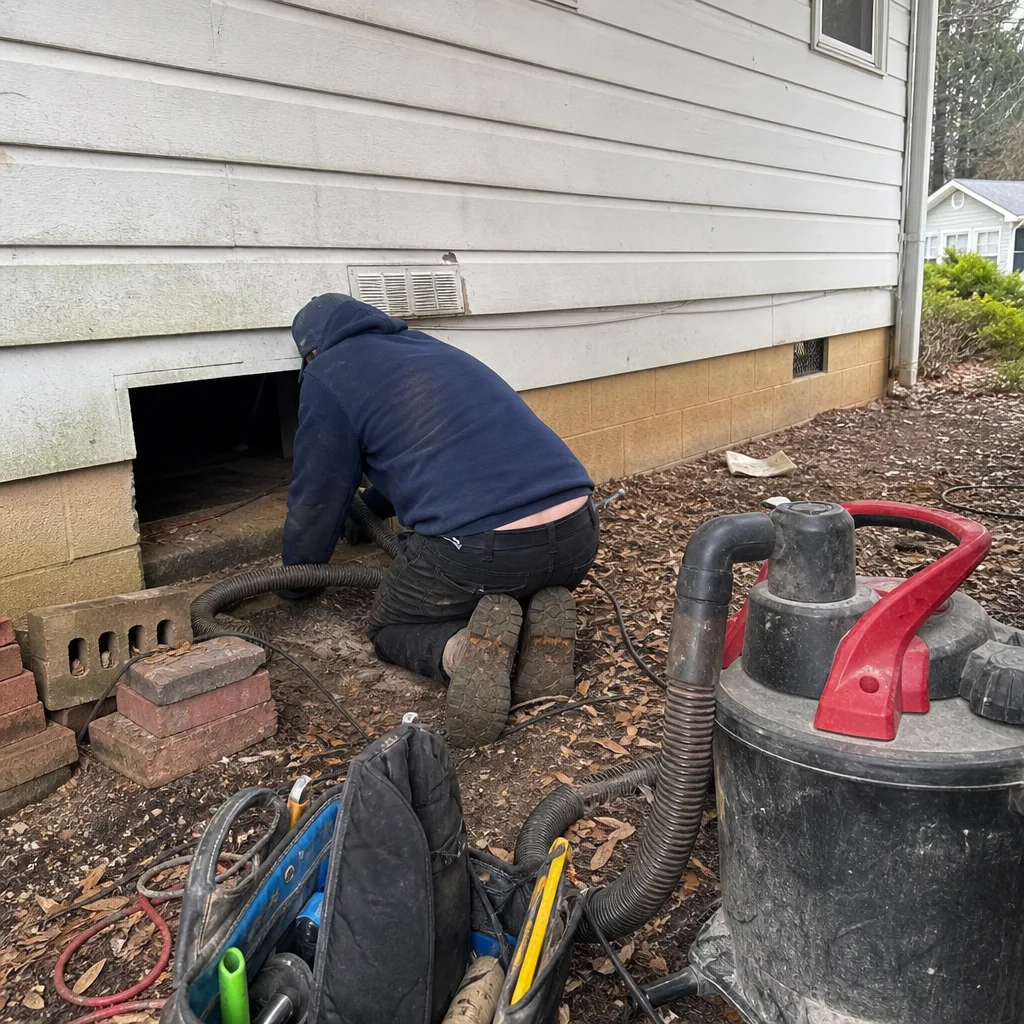
Whole-system duct and dryer vent check with before-and-after photos - you see exactly what came out of your vents
That "$99 whole-house special" is a bait ad - the real number appears once they are in your hallway, or the "clean" is a shop-vac at the register. We photograph the inside of your ducts before and after instead.
Air Duct Cleaning Permits, Codes & Inspections in Northeast Raleigh, NC: What You Need to Know
Here’s the part of duct cleaning nobody explains before the van pulls up: the cleaning itself almost never needs a permit, but the products and the repairs around it are tightly regulated. If a technician sprays any biocide or antimicrobial coating inside your duct system, that product must be EPA-registered for use in HVAC systems, and an unlabeled “sanitizing treatment” upsold at the door may violate federal pesticide application law. Most Northeast Raleigh homeowners have never been told this. This guide maps exactly where the regulatory lines sit in North Carolina: what’s permit-exempt, what triggers a mechanical permit under the state building code, what Wake County expects when contamination is severe, and what a written scope of work should document for your records.
Quick Answer
Standard air duct cleaning in North Carolina is permit-exempt, so a routine cleaning of your supply and return ducts in Northeast Raleigh does not require an inspection or a building permit. But duct repair, duct replacement, and any work at the air handler can fall under a mechanical permit under NC State Building Code Section M1601, and any chemical applied inside the ductwork must be EPA-registered for HVAC use. Severe mold contamination may also pull a job into Wake County Environmental Services remediation guidance.
Styles & brands we work with
- Whole-home duct cleaning
- Dryer vent cleaning
- Camera inspection
- Sanitizing & deodorizing
Table of Contents
- Is air duct cleaning permit-exempt in North Carolina?
- When does duct work trigger a mechanical permit under Section M1601?
- What chemicals are allowed inside your ducts? EPA registration rules
- When does a cleaning cross into mold remediation under Wake County guidance?
- Where cleaning ends and licensed HVAC work begins
- How to request a written scope of work and keep your records straight
- What an inspection should actually cover in Northeast Raleigh homes
- Frequently asked questions
Is air duct cleaning permit-exempt in North Carolina?
Yes. Cleaning the interior of existing ductwork in North Carolina does not require a building permit, and no inspection is triggered by cleaning alone. The state treats it as maintenance of an existing system, not construction. That holds whether you’re in a 1970s ranch near Millbrook or a newer build off Durant Road in Northeast Raleigh. You should not be told you need a permit to have dust, pet hair, or construction debris pulled out of ducts that are already installed.
What gets confusing is that “cleaning” is a broad word. The moment the scope shifts from removing debris to changing, opening, or adding to the system, the regulatory picture changes. So it helps to separate a cleaning visit into three buckets:
- Pure cleaning: rotary brush and negative-pressure extraction inside existing ducts. No permit.
- Repair and sealing: reconnecting a failed joint, sealing leaking seams, replacing a damaged duct run. Often triggers a mechanical permit.
- Air handler and coil work: opening the unit, removing components, or touching refrigerant lines. Licensed HVAC territory and possibly a permit.
In our experience, homeowners in Northeast Raleigh rarely get this distinction up front, which is why a written scope matters so much. A quote that just says “duct cleaning” tells you nothing about which bucket the job falls into. Ask, in writing, whether the work stays inside the ducts or reaches into the system. That one question keeps you ahead of most of the confusion.
If you’re planning a routine cleaning with no repair component, you can read more about what the visit involves on our Air Duct Cleaning Northeast Raleigh page. The regulatory side only becomes relevant when the job grows beyond maintenance.
When does duct work trigger a mechanical permit under Section M1601?
Duct repair, duct replacement, and any modification to the air distribution system can require a mechanical permit under NC State Building Code Section M1601, which governs duct systems and their installation. The permit question hinges on whether the work is maintenance of what’s already there or an alteration to the system itself. A cleaning visit that stays inside existing duct walls does not cross that line.
Here’s where the line usually gets crossed in a Northeast Raleigh home. Older housing stock, especially in neighborhoods with mature trees and decades of seasonal temperature swings, tends to develop duct problems that a cleaning tech will notice during the visit. Common findings that push a job toward permit territory include:
- Disconnected duct sections. A run that has pulled apart in the attic or crawlspace usually needs reconnection and support, not just cleaning.
- Crushed or collapsed flex duct. If a section is kinked so badly that airflow is restricted, replacement is the fix.
- Failed sealed joints. Leaking seams at the plenum or trunk line are a system alteration when you reseal them.
- Duct sizing changes. Adding, removing, or resizing a run changes the system design and normally needs a permit.
- Air handler access or component replacement. Any change at the unit itself moves you out of maintenance.
We’re careful to frame this without giving a false sense of what’s allowed. Permit thresholds and enforcement vary by project and jurisdiction, so the right move is to ask your city’s building department whether a specific repair needs a permit before the work starts. A reputable duct contractor will not dodge that question. If the answer is yes and the job requires a licensed contractor, you want that sorted before anyone opens a wall or a plenum.
The takeaway: routine cleaning in Northeast Raleigh stays clear of Section M1601. Duct repair and sealing, which we handle as a separate service, sits right at the boundary, and that’s exactly where you should ask for the permit answer in writing. For the cleaning portion of the work, our air duct cleaning overview explains what’s covered under a maintenance visit.
What chemicals are allowed inside your ducts? EPA registration rules
Any biocide, sanitizer, or antimicrobial coating applied inside ductwork must be EPA-registered for use in HVAC systems. That isn’t a preference, it’s federal law: a pesticide used in a way its label does not permit is an unlawful application, even if the product is legal to sell. If a technician offers to “sanitize” your ducts with a product you can’t inspect, you have no way to know whether the label actually allows that use.
This matters in Northeast Raleigh because sanitizing is commonly presented as a quick add-on. In a warm, humid climate like ours, moisture can collect in ductwork and create conditions where biological growth takes hold, so the pitch to sanitize sounds reasonable. It often is reasonable – a sanitizing step after cleaning can address what cleaning leaves behind. What’s not reasonable is a treatment with no paper trail.
Before you agree to any chemical treatment inside your ducts, ask to see the following. A professional will have all of it on hand:
- The product name and EPA registration number on the label. Every registered pesticide carries one.
- The label’s HVAC or duct-use language. The label must specifically permit application in duct systems, not just general surface use.
- A safety data sheet (SDS) so you know what’s being applied and any precautions afterward.
- The intended purpose – is this a sanitizer for biological growth, a coating for sealing, or a dust suppressant? Each has different rules.
Our technicians use commercial-grade equipment for the physical cleaning itself – Rotobrush rotary-brush systems for mechanical agitation of duct walls, and Abatement Technologies tools for remediation-grade particulate capture – and we treat any chemical application as a separate, documented step. That’s how it should work. You should never smell a mystery product and be told it’s “just sanitizer.” If a company can’t show you an EPA registration number, decline the treatment.
When does a cleaning cross into mold remediation under Wake County guidance?
When duct contamination is bad enough to qualify as a mold remediation project, general Wake County Environmental Services guidance around indoor mold becomes the relevant frame, and the job stops being a cleaning. The distinction matters because remediation implies containment, controlled removal, and verification – not a surface wipe and a spray. Most homes never reach that threshold, but severe cases do.
In Northeast Raleigh, the conditions that push a job toward remediation are usually visible and specific rather than subtle. Watch for ductwork that stays damp after cooling season, musty odors that return quickly after a cleaning, or visible growth on registers, insulation liner, or the interior of the air handler. Homes with chronic high indoor humidity, or a system that has run with a clogged condensate drain, are the ones most likely to land here. Pet-heavy homes and homes that have just finished a major renovation add dust and organic load that can feed growth when moisture is present.
If the scope crosses into remediation, here’s what a properly run job should include:
- Containment. Negative pressure and sealed openings so spores aren’t pushed into living space during the work.
- Source correction. Find and fix the moisture before removing growth, or it returns.
- Controlled removal. HEPA-level capture during cleaning, not a shop-vac that exhausts fine particulate back into the room.
- Verification. A post-clean inspection, ideally documented with photos, showing the condition of the ducts after.
This is where equipment level is not a marketing detail. Rotobrush and Nikro systems with HEPA filtration and negative-pressure containment are built to capture contaminants rather than redistribute them, and remediation-grade tools like Abatement Technologies exist for exactly this kind of environment. If your ducts are in remediation territory, ask what containment the contractor uses before they start. For the deeper maintenance side of this work, our HVAC cleaning page goes further into the coil and air handler.
Where cleaning ends and licensed HVAC work begins
Duct cleaning and licensed HVAC work are separate trades, and the boundary matters for your insurance and liability. Removing a coil, handling refrigerant, or disconnecting electrical components are tasks that fall to a licensed HVAC contractor in North Carolina. A duct cleaning company should not be doing them – and if one offers, treat that as a warning rather than a convenience.
In our experience, this line gets blurred exactly when a cleaning visit turns up a bigger problem. The tech opens the air handler to clean it and finds a coil that’s past cleaning, or an electrical disconnect that needs rework before the unit can safely be serviced. The temptation for a generalist outfit is to “handle it” on the spot. The right behavior is to stop, document the finding, and loop in a licensed HVAC contractor for anything that touches the refrigerant circuit or the electrical side.
For Northeast Raleigh homeowners, the practical questions to ask of any company are these:
- Will anyone remove the coil or touch refrigerant lines during this visit? If yes, is that person a licensed HVAC contractor?
- Will the electrical disconnect be handled? Who is doing it, and are they qualified for it?
- If you find something beyond cleaning, will I get a written finding rather than an on-the-spot upsell?
- Does the scope of work clearly separate cleaning, repair, and any licensed HVAC tasks?
The insurance angle is what most homeowners miss. If unlicensed hands damage a coil, a refrigerant line, or a circuit, your homeowner’s policy and the contractor’s coverage can both become murky, and the repair bill lands on you. A company that stays inside its lane protects you. We coordinate the cleaning, repair, and sealing side of your full air pathway in one visit so you’re not managing three vendors, and where a job requires licensed HVAC work, we say so rather than absorbing it.
How to request a written scope of work and keep your records straight
A written scope of work is the single most useful document a duct cleaning visit can produce, and you should request one before any work begins. It protects you during the job, and it becomes surprisingly valuable later if you sell the home and need to disclose or document what was done to the air system. In Northeast Raleigh, where a lot of housing turns over and buyers ask questions about the HVAC, a clean paper trail is worth keeping.
Ask for the scope in writing before the technician starts, and ask for a completion summary after. A useful scope of work covers the following:
- Every component to be cleaned. Supply and return ducts, registers, grilles, plenum, and whether the air handler is included.
- The equipment and method. Rotary brush, HEPA filtration, negative pressure – name the systems, not just “professional equipment.”
- Any product used inside the ducts, with its EPA registration number and intended purpose.
- Findings. Disconnected runs, crushed flex, visible growth, or leaks discovered during the visit.
- Repairs recommended, and whether they require a permit. This is the line that separates cleaning from construction.
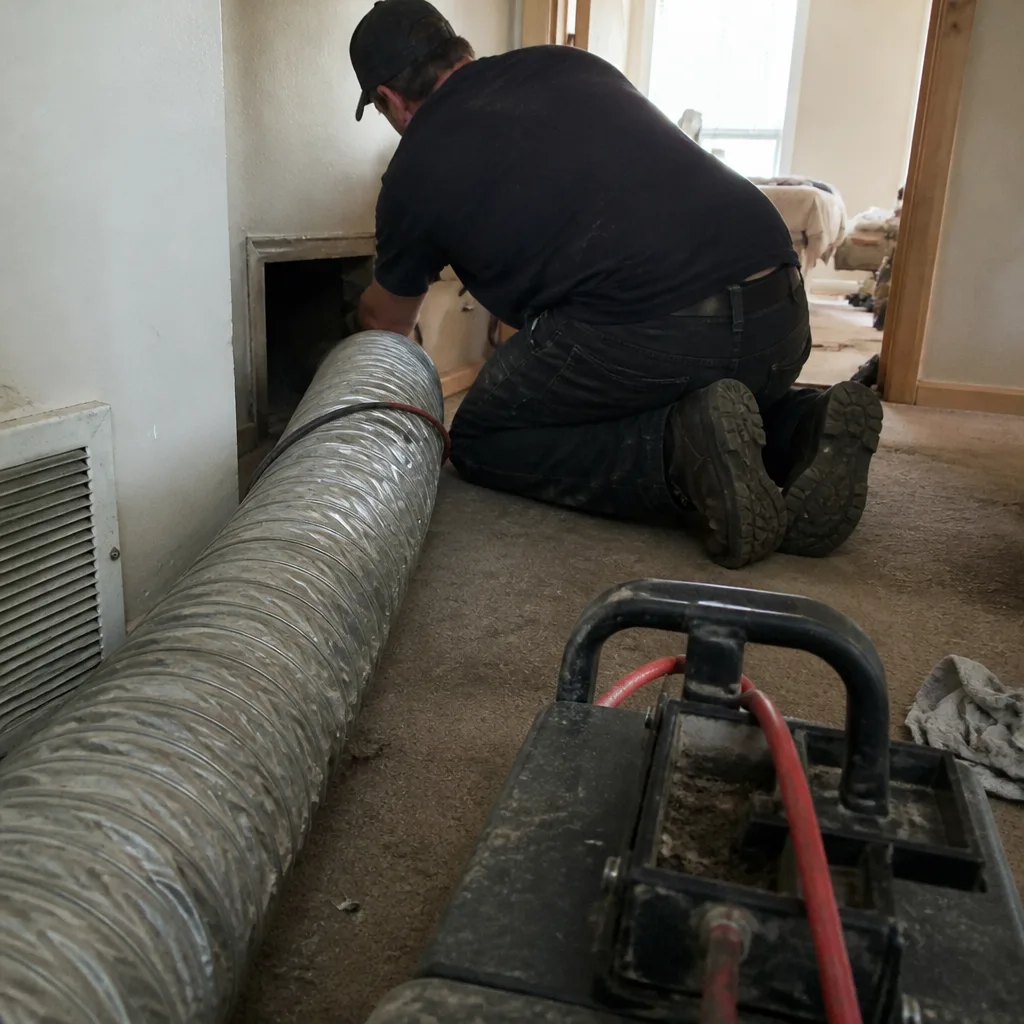
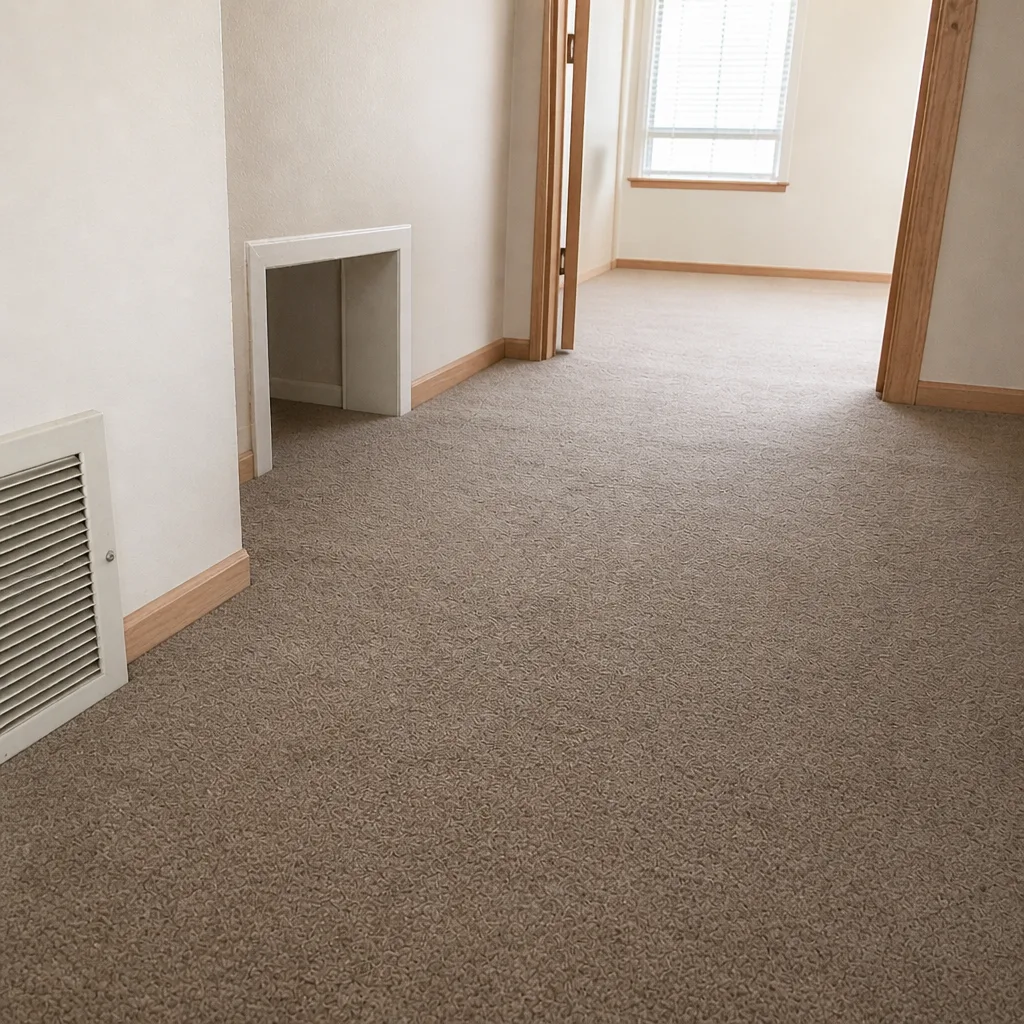
- Before-and-after documentation. Photos of the ducts themselves, so you have evidence the work was done.
That last point answers a fair question homeowners ask us all the time: how do I know the work was actually done? Photos of your own ducts before and after are the honest answer. A company that can’t or won’t produce them is asking you to take the cleaning on faith. Guarding your floors and finishes during the visit is the same principle on the customer-service side – a professional operation shows care for the home, not just the ductwork. If you also have a whole-home filter or a smart thermostat, note the model in your records as well; familiarity with systems like Aprilaire and Honeywell helps a technician recommend filtration upgrades that keep the ducts cleaner between cleanings. For the fire-safety side of your air system, which has its own inspection logic, see our dryer vent cleaning guide.
What an inspection should actually cover in Northeast Raleigh homes
A duct inspection should evaluate the entire air pathway, from the supply plenum at the air handler to every vent register in the home, and should produce a written record of what was found. Anything narrower is a look, not an inspection. Northeast Raleigh homes present a few specific patterns worth knowing as you evaluate a contractor’s thoroughness.
Our climate swings between humid summers and cold snaps, and homes here range from older builds with original galvanized ductwork to newer construction with flex runs. That mix produces a predictable set of issues a good inspection catches:
- Condensation and moisture at the air handler. Humid summers put a premium on a sealed, insulated system. Damp insulation liner is a red flag for growth.
- Disconnected or sagging flex in attics and crawlspaces. Seasonal expansion and pest activity can pull runs apart, leaking conditioned air into unconditioned space.
- Construction debris in newer or recently renovated homes. Drywall dust and sawdust settle in ducts and get pulled through every register.
- Pet hair and dander in the return path. Heavy-shedding pets load up return ducts faster than supply runs.
- Filtration condition. A clogged or mismatched filter strains the blower and can pull unfiltered air around the frame.
A thorough inspection also verifies airflow at the registers and looks for leaks at the seams and plenum. If you want a whole-home filtration upgrade after a cleaning, familiarity with Aprilaire and Honeywell product lines lets a technician recommend a setup that fits your existing system rather than a generic add-on. The point of the inspection isn’t to sell you something – it’s to document the condition of the system so the cleaning scope matches reality. If you’d like a written inspection and estimate for a Northeast Raleigh home, call (833) 350-5194. We answer 24/7. Fast dispatch from 7am to 7pm, Sunday through Friday.
See the difference
 Before
 After
 Before
 After
 Before
 After
Common Mistakes to Avoid
- Accepting a sanitizing treatment without seeing the EPA registration number. Any product applied inside your ducts must be registered for HVAC use. If the label can’t be shown, the treatment shouldn’t happen.
- Assuming no permit means no rules. Cleaning is permit-exempt in North Carolina, but repair and air handler work can require a mechanical permit under Section M1601. Treating the whole visit as “just maintenance” hides the boundary.
- Letting a cleaning company handle licensed HVAC work. Coil removal, refrigerant handling, and electrical disconnection belong to a licensed HVAC contractor, and crossing that line can complicate insurance if something goes wrong.
- Skipping the written scope of work. Without a document listing what was cleaned, what was applied, and what was found, you have no record – and nothing to disclose or defend later if you sell the home.
- Trusting a price without photos. A quote with no before-and-after documentation leaves you guessing whether the ducts were actually cleaned. Ask for images of your own ductwork.
- Booking a generalist with consumer-grade gear. A shop-vac and a hose won’t pull debris from duct walls or contain fine particulate. Rotobrush, Nikro, and Abatement Technologies equipment exist because the job needs them.
- Ignoring moisture as the root cause. Cleaning a damp system without fixing the moisture source means growth returns. If a contractor won’t address the moisture, the cleaning is short-lived.
When to Call a Professional
Call a professional when you smell a musty odor that returns after cleaning, when you can see debris or growth at the registers, or when a renovation has left drywall dust in the system. If anyone in the home has allergies that worsen indoors, or if the ducts haven’t been looked at since a major remodel, a written inspection and cleaning plan is worth having. Call a licensed HVAC contractor instead of a duct cleaning company for anything touching the coil, refrigerant, or electrical side. And if a technician offers a chemical treatment inside your ducts, call someone who can show you the EPA registration first. Air Duct Cleaning Northeast Raleigh offers free estimates in Northeast Raleigh. Call (833) 350-5194. We answer 24/7. Fast dispatch from 7am to 7pm, Sunday through Friday.
Frequently Asked Questions
No. Standard air duct cleaning in North Carolina is permit-exempt, so a routine cleaning of existing ductwork does not require a building permit or an inspection. The permit question only arises if the job grows into duct repair, duct replacement, or work at the air handler, which can fall under NC State Building Code Section M1601. Call (833) 350-5194 for an exact quote on a Northeast Raleigh cleaning – estimates are free.
Yes. Any biocide, sanitizer, or antimicrobial applied inside ductwork must be EPA-registered for HVAC system use, and an unlabeled treatment may violate federal pesticide application law. Before agreeing to any chemical inside your ducts, ask for the product name, its EPA registration number, the label’s duct-use language, and a safety data sheet. If a company can’t produce them, decline the treatment and call (833) 350-5194 for a documented, equipment-based cleaning instead.
Duct work needs a licensed HVAC contractor the moment it involves coil removal, refrigerant handling, or electrical disconnection. Duct cleaning itself stays within a duct specialist’s scope; repairs that reach into the air handler or the refrigerant circuit do not. Keeping that boundary intact protects your insurance and liability if something goes wrong. Call (833) 350-5194 to schedule a cleaning and a written inspection, and we’ll flag any licensed work separately.
You know the work was done when you receive before-and-after photos of your own ducts along with a written scope of work and completion summary. That documentation should list what was cleaned, what products were used with EPA registration numbers, and what was found during the visit. Ask for it up front. Call (833) 350-5194 for a free estimate and a cleaning plan that includes documented results.
Duct contamination becomes a mold remediation job when growth is visible, musty odors persist after cleaning, or ductwork stays damp and conditions qualify as remediation under Wake County Environmental Services guidance. Remediation means containment, controlled HEPA-level removal, source moisture correction, and post-clean verification – not a surface spray. If you’re unsure where your home sits, call (833) 350-5194 for an inspection.
Some quotes are cheaper because they leave out the parts that cost money: negative-pressure containment, HEPA filtration, documentation, and separating repair from cleaning in a written scope. A low number that becomes a much larger invoice once the technician is on site is the industry’s bait-and-switch reputation at work. We give one flat price per system, agreed before work starts, with before-and-after photos of your ducts. Call (833) 350-5194 for an honest, whole-system estimate.
The Bottom Line
Air duct cleaning in North Carolina is permit-exempt, but the rules around the job are real. Duct repair and air handler work can trigger a mechanical permit under NC State Building Code Section M1601. Any chemical applied inside your ducts must be EPA-registered for HVAC use, and severe contamination can pull a Northeast Raleigh home into Wake County mold remediation guidance. Licensed HVAC work stays with licensed HVAC contractors for good reason. Ask for a written scope of work, before-and-after photos, and the EPA registration number on any product used. That’s what separates a documented cleaning from a guess.
We handle the full air pathway – cleaning, sanitizing, duct repair and sealing, and dryer vent clearing – with commercial-grade Rotobrush, Nikro, and Abatement Technologies equipment, and one flat price per system agreed before we start. Call (833) 350-5194 for a free estimate. We answer 24/7. Fast dispatch from 7am to 7pm, Sunday through Friday.
Written by the team at Air Duct Cleaning Northeast Raleigh.