
Last updated November 23, 2026
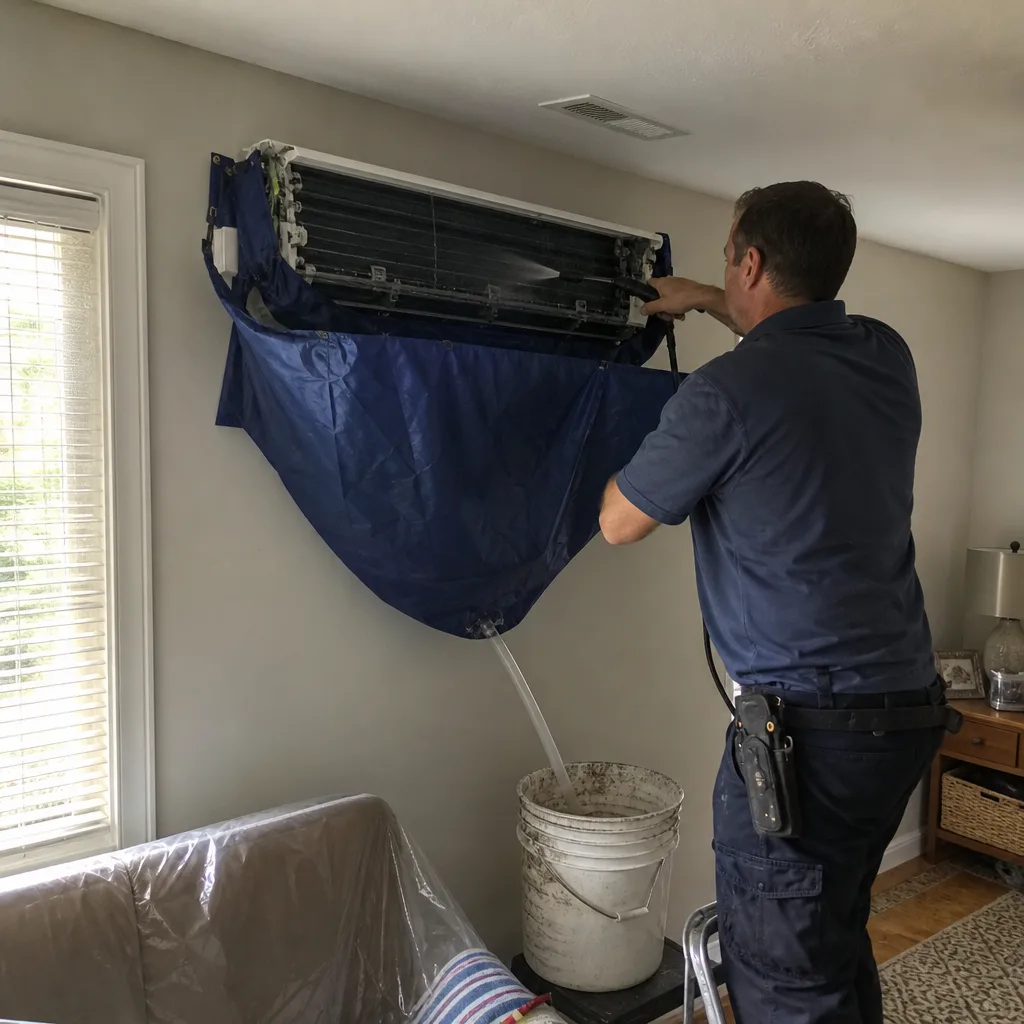
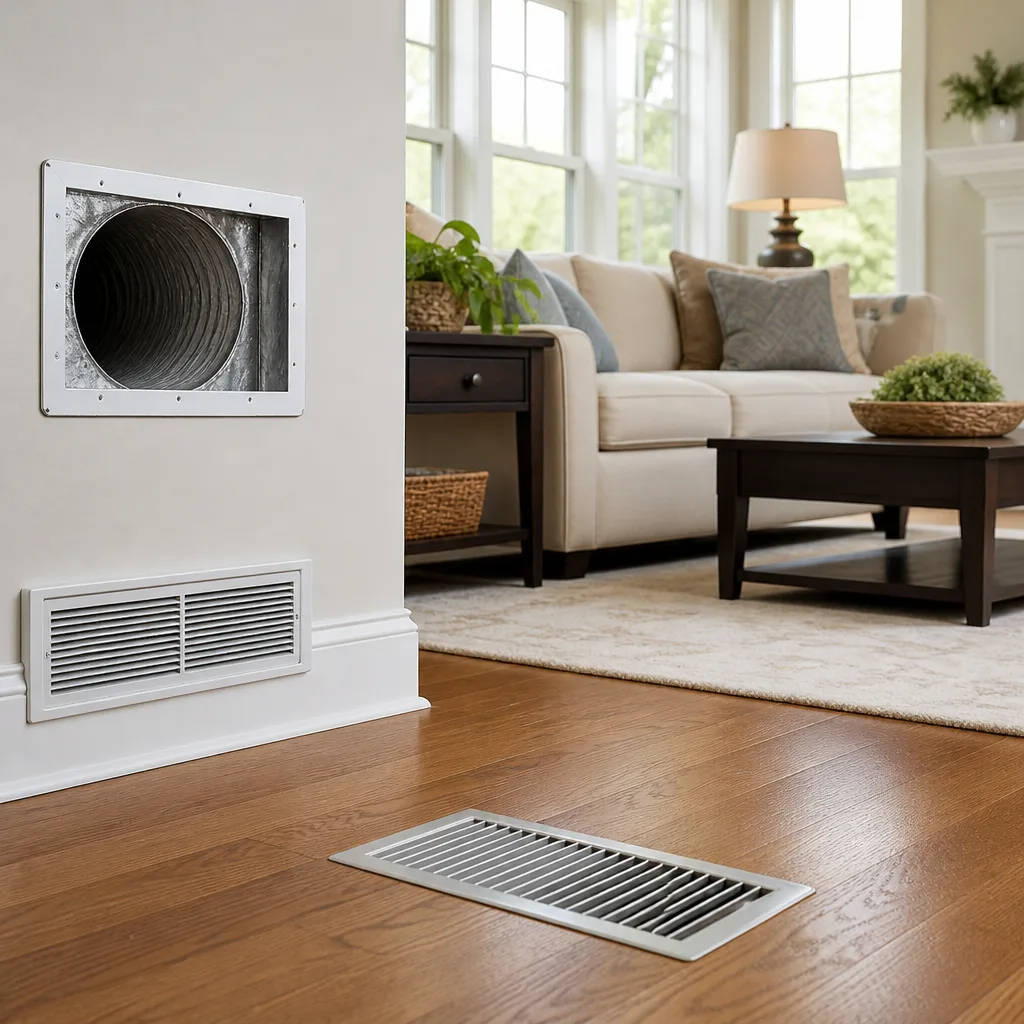 Whole-home duct cleaning
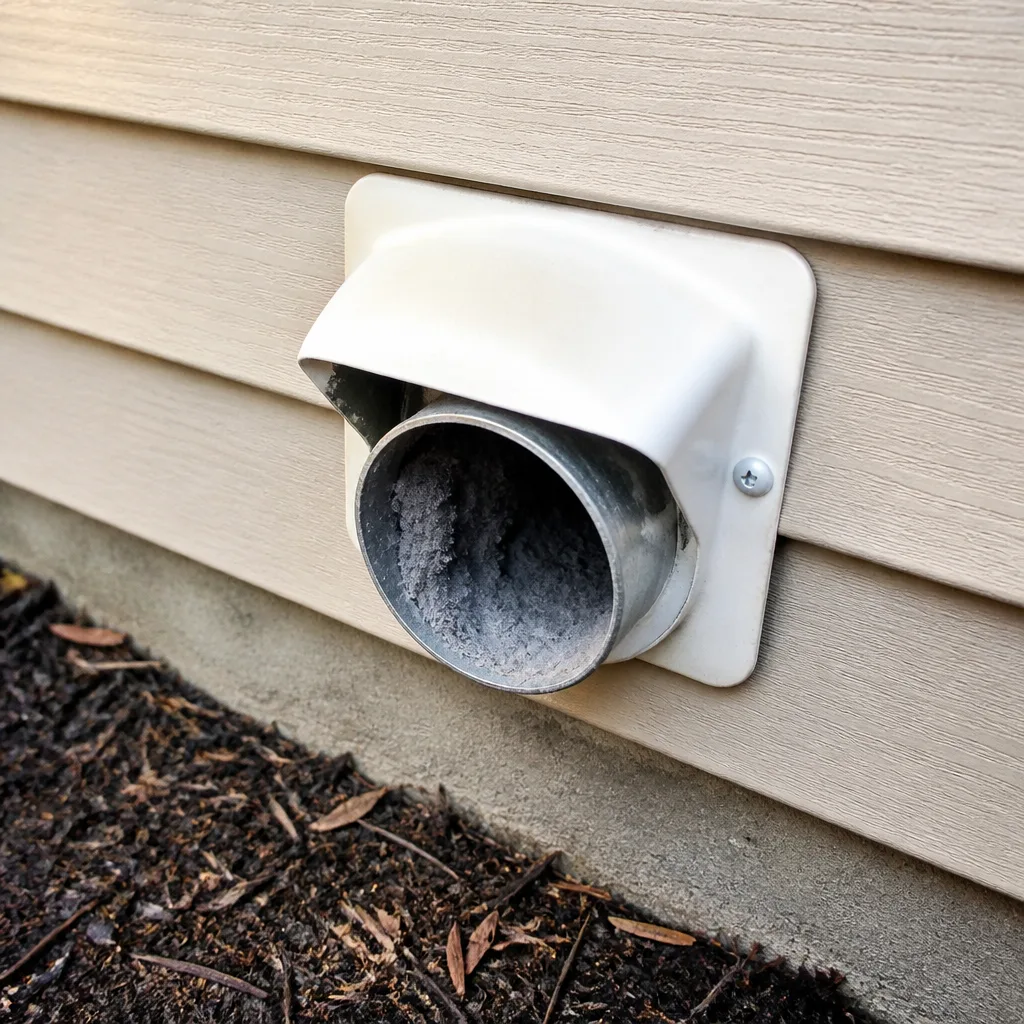 Dryer vent cleaning
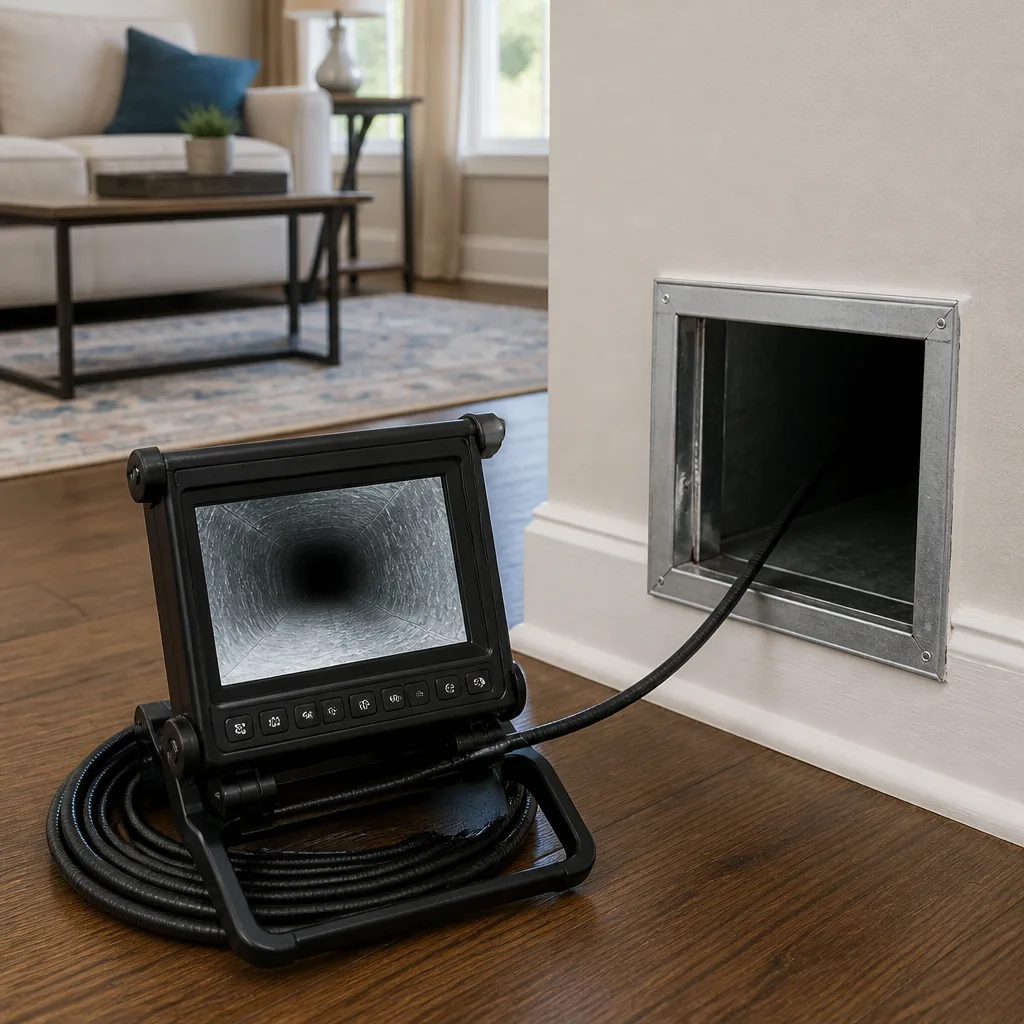 Camera inspection
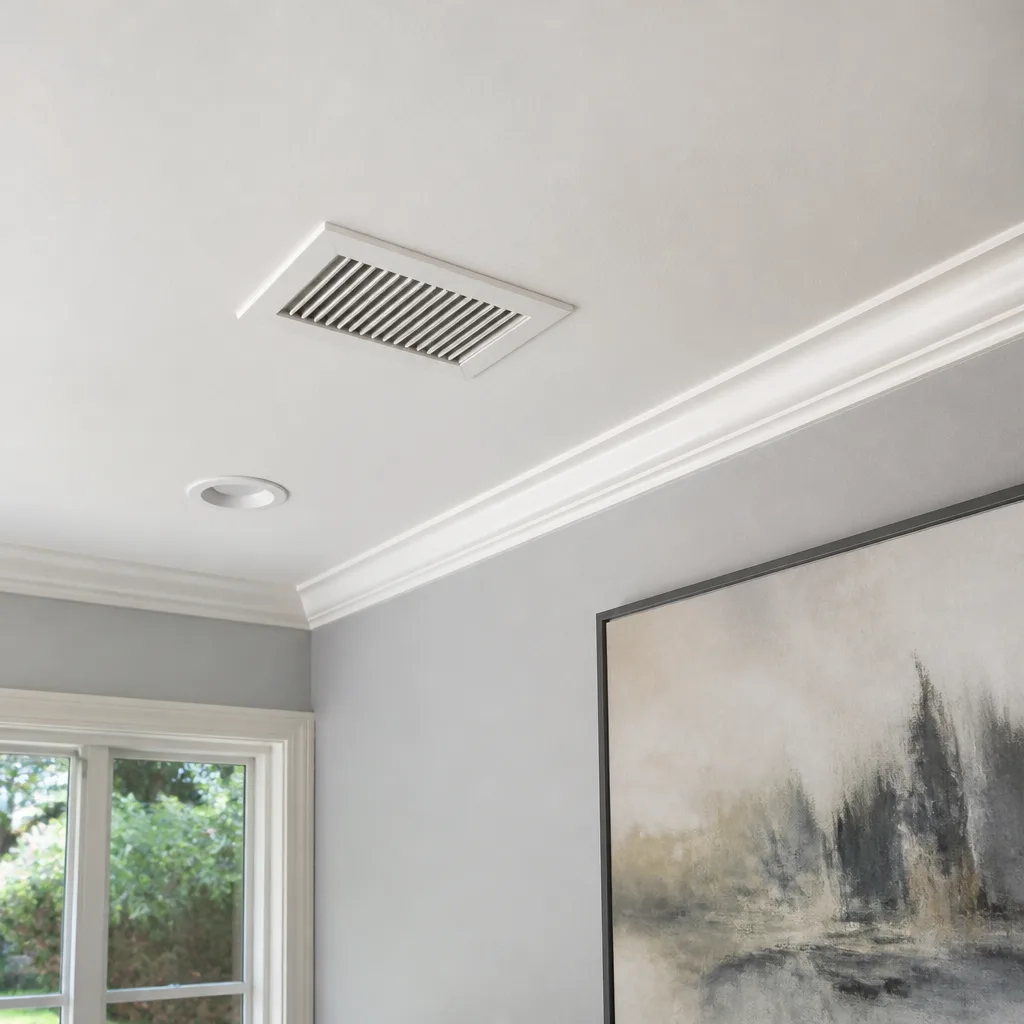 Sanitizing & deodorizing
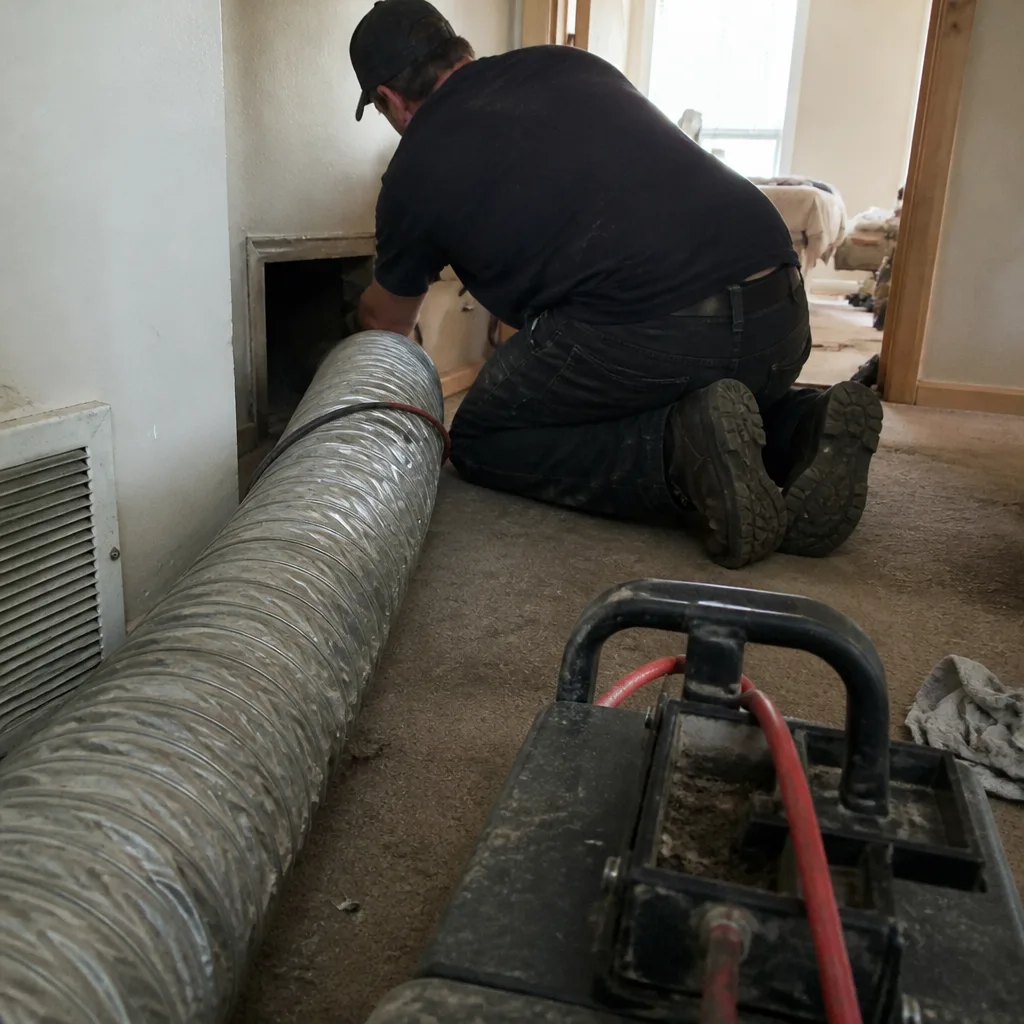
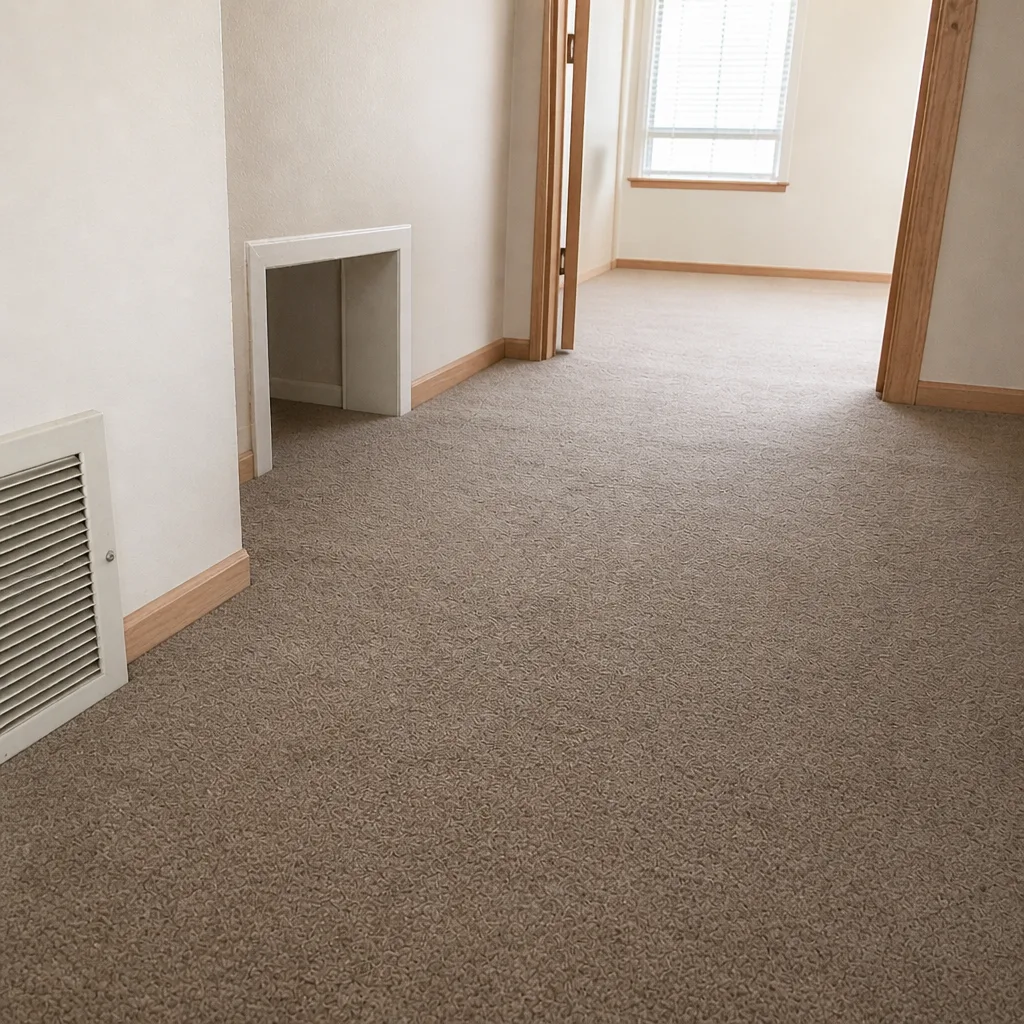
Whole-system duct and dryer vent check with before-and-after photos - you see exactly what came out of your vents
That "$99 whole-house special" is a bait ad - the real number appears once they are in your hallway, or the "clean" is a shop-vac at the register. We photograph the inside of your ducts before and after instead.
Air Duct Cleaning Warning Signs: A Northeast Raleigh Homeowner’s Reference Guide
A single dusty register isn’t a warning sign. It’s normal. Supply registers collect household dust the same way a windowsill does, and cleaning the grille is usually the whole fix. The sign that matters is different: when one register is noticeably darker than its neighbors on the same system, something is partially blocking that duct run and starving it of airflow. That’s a localized restriction, not a housekeeping problem, and it’s exactly the kind of early indicator this guide is built around. Below, we walk through the subtle signals that show up in Northeast Raleigh homes before ductwork reaches a critical state, and how to tell the difference between a sign that justifies a cleaning now and one that points to a repair or remediation job.
Quick Answer
The most reliable early warning signs of duct contamination are uneven airflow between vents on the same system, dark staining around register edges, a musty smell that appears only at startup, filters that load faster than they used to, and visible debris in return grilles after renovation work. Visible mold, rodent droppings and heavy dust plumes are late-stage signs, not early ones. If you’re seeing any two or more of the early indicators at once in a Northeast Raleigh home, it’s worth having the full air pathway inspected before the problem spreads to the coil and blower.
Styles & brands we work with
- Whole-home duct cleaning
- Dryer vent cleaning
- Camera inspection
- Sanitizing & deodorizing
Table of Contents
- Register Dust vs. Dark Staining Around the Edges
- Uneven Room Temperatures and the Tissue Test
- Musty Odor Only at Startup vs. Persistent Odor
- Checking the Blower Wheel Without Opening the Air Handler
- Post-Renovation Warning Signs in Northeast Raleigh
- Filter Loading Speed as a Diagnostic Signal
- Cleaning Now vs. Cleaning Plus Remediation
- A Numbered Home Walk-Through Checklist
Register Dust vs. Dark Staining Around the Edges
Surface dust on a register grille is cosmetic. You can wipe it off with a damp cloth and it comes back in a month, and that tells you nothing about the ducts themselves. Dark staining around the edges of the grille, however, is a different animal. That streaking – usually gray or black, often widest at the corners where the boot meets the drywall – is a strong indicator of a pressurization leak. The supply boot isn’t sealed tight to the drywall, so conditioned air escapes into the wall cavity while the return side pulls unconditioned air back into the room. The result is a filter of sorts, and the cavity air carries fine dust, insulation fibers and whatever else settles in a wall. Over a couple of seasons, that shows up as a shadow line around the register frame.
This distinction matters because it changes the remedy. Cleaning the ducts addresses the debris inside the system. It doesn’t fix the leak. A duct repair and sealing visit is what closes the gap between the boot and the drywall, and without that, the staining returns as soon as the cavity releases the next batch of dust. In our experience across Northeast Raleigh, sealing a handful of leaky boots often does more for air quality and energy use than a full duct cleaning on its own – which is why we run both through the same team in one visit rather than sending you to a second contractor.
What to look for on a walk-through:
- Staining only at the corners of the register: boot-to-drywall leak.
- An even film of dust across the entire grille face: normal household dust, cosmetic.
- Darkness concentrated on the vent slats rather than the frame: airflow pulling dust through, often a sign the filter is overdue.
- Gray “smoke” streaks along the ceiling near the register: escaping supply air, worth inspecting the boot connection.
If more than one register in the home shows corner staining, the leak is systemic rather than isolated, and an air duct cleaning visit plus sealing is the smarter sequencing than cleaning alone.
Uneven Room Temperatures and the Tissue Test
Uneven temperatures from room to room are one of the best-kept diagnostics in residential HVAC, and almost nobody does the test that exposes them. The tissue test is simple: hold a single-ply tissue against each supply register grille while the system runs, and note how far it lifts. A properly balanced run will pull the tissue taut. A restricted run won’t move it much at all. Do this at every supply register in the home, one after another, and you’ll have a crude but reliable map of which runs are moving air and which are starved.
Why it works: the blower is producing the same effort to every branch. If the tissue lifts at eight registers and droops at two, the difference is downstream of the blower. The most common culprits are a collapsed flex duct, a duct that’s disconnected at a joint, a run that’s crushed under insulation, or debris packed into the run at a fitting. In older Northeast Raleigh homes where ductwork has been added in stages over the years, crushed runs are surprisingly common behind finished ceilings and in tight attic spaces.
- Turn the system on and let it run for five minutes to stabilize airflow.
- Hold a tissue against each supply register and record which ones lift, hold, or droop.
- Repeat at the return grilles: a return that feels weak or warm may be pulling air through leaks elsewhere in the envelope.
- Note the room for each result. Rooms sharing a trunk line are usually restricted together.
- Bring the map to the technician. It turns “our bedroom is always cold” into “the trunk serving the master is starved,” which saves diagnostic time and often reduces the scope.
That trade-off is why we run a full air pathway check on any HVAC cleaning visit – the tissue map almost always surfaces a run that needs more than cleaning.
Musty Odor Only at Startup vs. Persistent Odor
A musty smell that appears for the first thirty to sixty seconds after the system kicks on, then fades, is a signal about the evaporator coil and drain pan, not the ducts themselves. What you’re smelling are volatile organic compounds off-gassing from the biofilm that grows on the coil face and the standing moisture in the pan during the off cycle. When the system starts, that spike of stagnant air gets pushed through first, and the odor dissipates once fresh air follows. This is early-stage. The biofilm is present, but it hasn’t yet spread into the duct field. A coil and pan cleaning, plus sanitizing, is usually the right call – and it’s cheaper than a full remediation because you’ve caught it before it migrated.
A persistent musty odor that doesn’t fade after startup is a different diagnosis. It generally means active mold colonization somewhere in the duct system – often on interior duct liner, at a wet fitting, or in a duct run that passes through a humid crawlspace. In that case, cleaning without remediation puts the spores back in the air as soon as the blower runs. The right sequence is containment, HEPA filtration and mechanical cleaning, followed by an EPA-registered sanitizer. We run Abatement Technologies equipment on these jobs because the particulate capture has to hold up to remediation-grade demand, not just light dust removal.
Two other smells worth noting:
- Rotten-egg or sulfur smell: not a duct issue. Stop and call your gas utility.
- Dirty-sock or sweaty-foot smell: usually a wet coil or an oversized system running short cycles, which leaves the coil wet between runs.
Northeast Raleigh’s humid summers keep coils moist for weeks at a stretch, and shorter cooling cycles make the wet-dry cycle harsher on the drain pan. That’s why we see more startup-mustiness reports here than in drier climates.
Checking the Blower Wheel Without Opening the Air Handler
You can’t see the blower wheel from the outside, and you shouldn’t open the air handler to look. There’s live electrical service inside, plus the fan itself, and it’s not a panel a homeowner should be poking around in. But there are three reliable proxies that tell you the wheel is loaded with debris, and none of them require touching the equipment.
- Runtime hours. A single-speed system running continuously through a Northeast Raleigh summer will accumulate several hundred hours of blower use per season. If your system has been in service for five or more years without a blower cleaning, the wheel is likely carrying a layer of dust on every vane.
- Airflow feel at supply registers. Lay the back of your hand over a supply register and note the velocity. Compare it to how the same register felt a year or two earlier. A gradual softening of airflow, with no change in filter maintenance, frequently points to a fouled wheel.
- Filter loading speed. If a filter you used to change every three months is now loading in half that time, the system is pulling more debris from somewhere – often the ducts themselves, sometimes a fouled wheel shedding dust back into the airstream.
The blower wheel is a scoop. Each vane is designed to catch air, and when dust builds up on the leading edge, the scoop angle changes and airflow drops without any noise change. A dirty wheel is often invisible until the system starts pulling too many amps or the coil starts freezing. Cleaning the blower is part of a proper air duct cleaning Northeast Raleigh scope on any system old enough to have accumulated a real dust load. Ask the technician to show you before-and-after photos of the wheel: if a company cleans the ducts but skips the blower, the job is only half done.
Post-Renovation Warning Signs in Northeast Raleigh
Northeast Raleigh has seen continuous renovation activity in established neighborhoods, and remodel dust is the single most common reason a system needs cleaning years ahead of schedule. Drywall dust is the worst offender: it’s fine, abrasive, and drawn to return grilles as soon as the wet saw starts running. A return that’s been open during demo can pull a tablespoon or more of gypsum dust into the return trunk in a single morning.
Two things matter in post-renovation cases. First, the HVAC system should be sealed off before demo, not after. Tape and plastic over every return and supply in the work zone, plus a filter change at the end of each day, prevents most of the problem. Second, when the system wasn’t sealed, the debris isn’t only in the ducts. Construction debris – chunks of drywall, insulation, nails, sawdust – collects at flex duct connections, behind register boots, and at the plenum where the trunk meets the air handler. A standard duct cleaning brushes the walls of the runs but can miss those packed connection points. If a vacuum head or brush can’t reach the fitting, the debris stays.
Specific post-renovation checks worth making in a Northeast Raleigh home:
- Drywall dust visibly coating the return grille slats.
- Flex duct that sags or has a kinked fitting under a finished ceiling – often crushed during a demo or duct relocation.
- Duct runs that pass through new drywall penetrations without a sealed collar.
- Debris visible in the boot when you remove a register – a sign the run wasn’t sealed at install.
Any one of these justifies a call. Two or more justify a full-scope cleaning, plus photos of the connections before and after. We work carefully around finished surfaces – Guardsman-level care for floors, trim and walls is the standard we hold on renovation cleanups.
Filter Loading Speed as a Diagnostic Signal
Filter loading speed is the simplest, cheapest diagnostic in your home, and it’s the one most people ignore because the filter still looks “fine.” Here’s how to read it. Write the date on the filter frame every time you change it. If you’re changing on a fixed cadence – every ninety days, say – and the filter is coming out gray and matted at sixty days, the system is pulling more debris than the filter can absorb. That extra debris has to come from somewhere.
Three explanations matter:
- Duct debris. The ducts are shedding dust back into the return air, which always passes through the filter first. This is the most common explanation in homes younger than a decade but with light cleaning history.
- Return leaks. A return trunk that’s drawing attic or crawlspace air is pulling insulation particles and dust through the filter, sometimes at a volume the filter isn’t sized to handle.
- High MERV with an undersized filter slot. A 1-inch slot with an aggressive MERV rating loads quickly because the media surface is small. A whole-home upgrade to an Aprilaire or Honeywell media cabinet, with a 4- or 5-inch filter, both filters better and loads more slowly.
In our experience across Northeast Raleigh, that third explanation is the one homeowners hadn’t considered, and it changes the recommendation. Cleaning the ducts without addressing the filter slot leaves the system loading the same way a year later. A whole-home media cabinet, sized to the system, is where ductwork maintenance turns into air quality you can actually measure.
Cleaning Now vs. Cleaning Plus Remediation
This is the fork in the road our clients ask us about most often, so let’s make it concrete. Cleaning now is appropriate when the system has accumulated dust and debris but no active biological growth, no water intrusion, and no visible contamination beyond ordinary dust. Remediation is the right scope when any of the following are true:
- Persistent musty odor, not the startup spike, as covered above.
- Visible microbial growth on duct surfaces, liner, coil or pan.
- Water damage history: a burst pipe, an AC condensate overflow, or a roof leak that reached the ductwork.
- Rodent or pest activity inside the duct field.
- Post-fire or post-flood contamination in the air pathway.
Remediation isn’t just cleaning harder. It’s a containment job: negative pressure inside the duct field, HEPA filtration of the work zone, mechanical agitation with the right brush head for the duct material, and then sanitizing with an EPA-registered product. A standard rotary-brush cleaning – which is what we use on every normal duct cleaning, via Rotobrush – handles the ordinary case. Remediation calls for tools that hold up to finer particulate, and that’s where Abatement Technologies comes in.
What most Northeast Raleigh homeowners want to know is whether their job just qualifies for the standard scope. The honest answer is: usually yes, and we can tell you from a walk-through and photos before we ever quote the remediation. If your signs are limited to the standard list – filter loading, uneven airflow, register dust – you’re in cleaning territory. If the signs include persistent odor, moisture, or visible growth, expect the larger scope. For a broader look at how to think about the choice, see our air duct cleaning page.
A Numbered Home Walk-Through Checklist
Here’s how to gather the evidence before you call anyone. Fifteen minutes and a flashlight will get you most of the way there.
- Register inspection. Pull the dust film test on three or four supply registers across the home. Note which grilles are uniform-dusty and which show corner staining.
- Tissue test on every supply. Map which registers lift, hold or droop. The restricted rooms tell you more than the average.
- Return grille check. Look for dust coating, debris chunks, or dark buildup in the grille face and behind the grille cavity.
- Filter date check. Write the change date on the frame now. Note the loading pattern on the previous filter.
- Odor test. Stand near a supply register and run the system from cold. Note whether the smell spikes for less than a minute or persists.
- Blower feel test. Hand to the register. Note velocity today, and compare to how you remember it from a year ago.
- Renovation or moisture history. Any recent remodel, plumbing event, or roof work in the last twenty-four months?
Bring that checklist to your call. It shortens the conversation and lets a technician quote the right scope the first time.
Common Mistakes to Avoid
- Treating surface dust as a contamination signal. A grille coated evenly with dust is normal. Only the uneven pattern – one grille dirtier than its neighbors – points at a duct issue. Wiping a grille doesn’t fix anything, but it does tell you whether the pattern returns.
- Cleaning ducts without sealing leaks. In Northeast Raleigh’s older homes, supply boots leak into wall cavities constantly. Cleaning without sealing leaves the pressurization leak in place, and the staining returns within a season.
- Running the system during demo without covering the returns. Drywall dust enters the return trunk in minutes and packs into flex duct connections where brushes may not reach. Seal first, clean later.
- Choosing a cleaning based on a coupon price. A very low teaser price usually becomes a larger invoice once the technician is on site. Ask for one flat price per system, agreed before work starts.
- Upgrading to a high-MERV filter without checking the slot. A 1-inch slot with a high-MERV media loads fast, restricts airflow, and can freeze the coil. Media cabinets in Aprilaire or Honeywell systems are the right upgrade, and they need proper sizing.
- Skipping the blower wheel. A cleaning that leaves a fouled blower wheel in place puts dust back into the air on the same day. Ask for before-and-after photos of the wheel, coil and pan.
- Assuming a persistent smell is cosmetic. A musty smell that doesn’t fade at startup can indicate active biological growth. It needs remediation, not a deodorizing mist.
See the difference
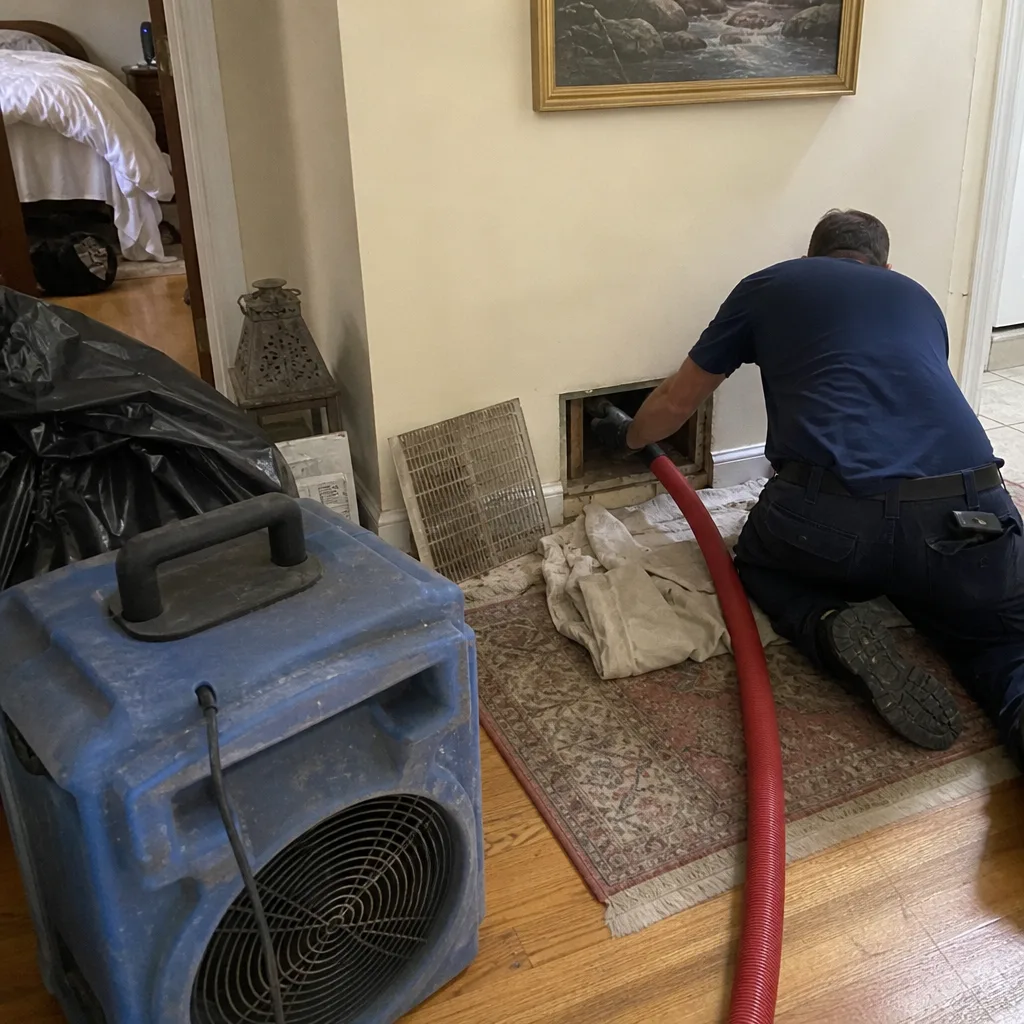 Before
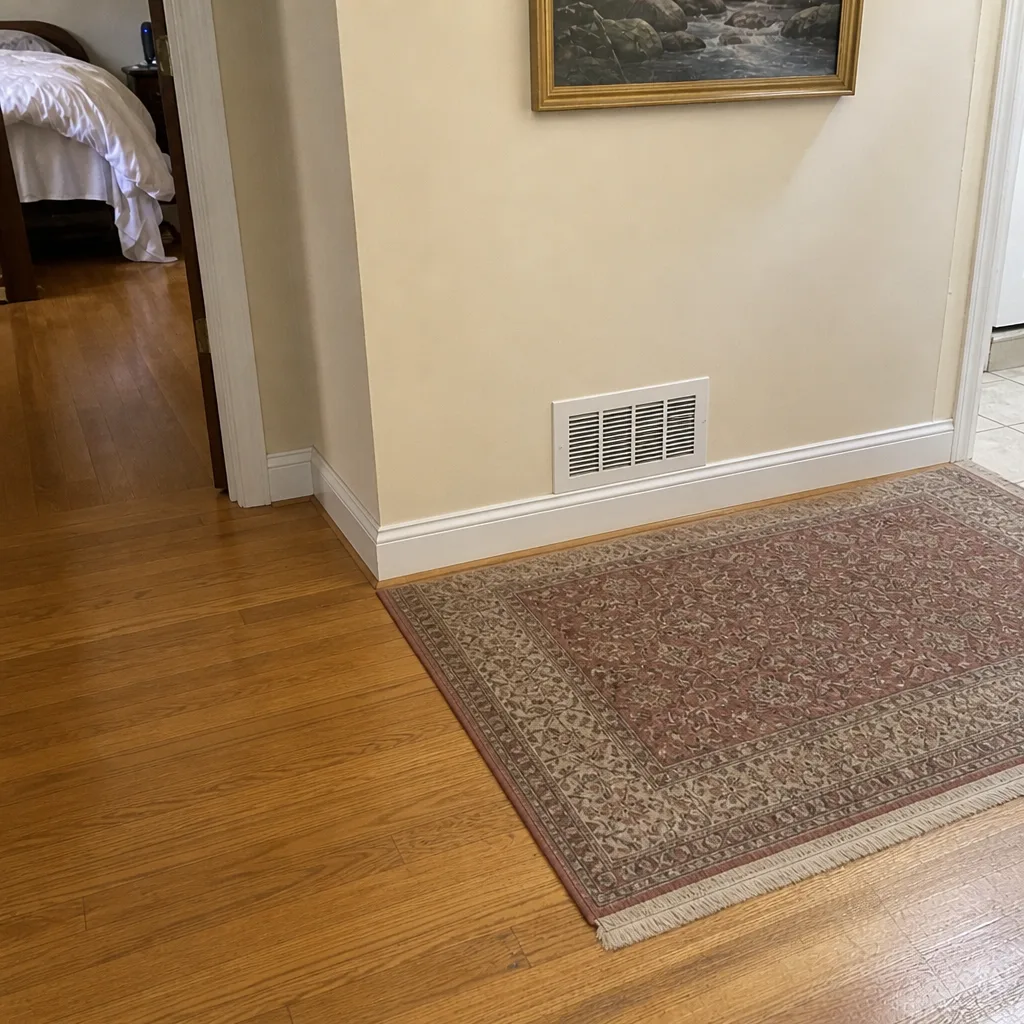 After
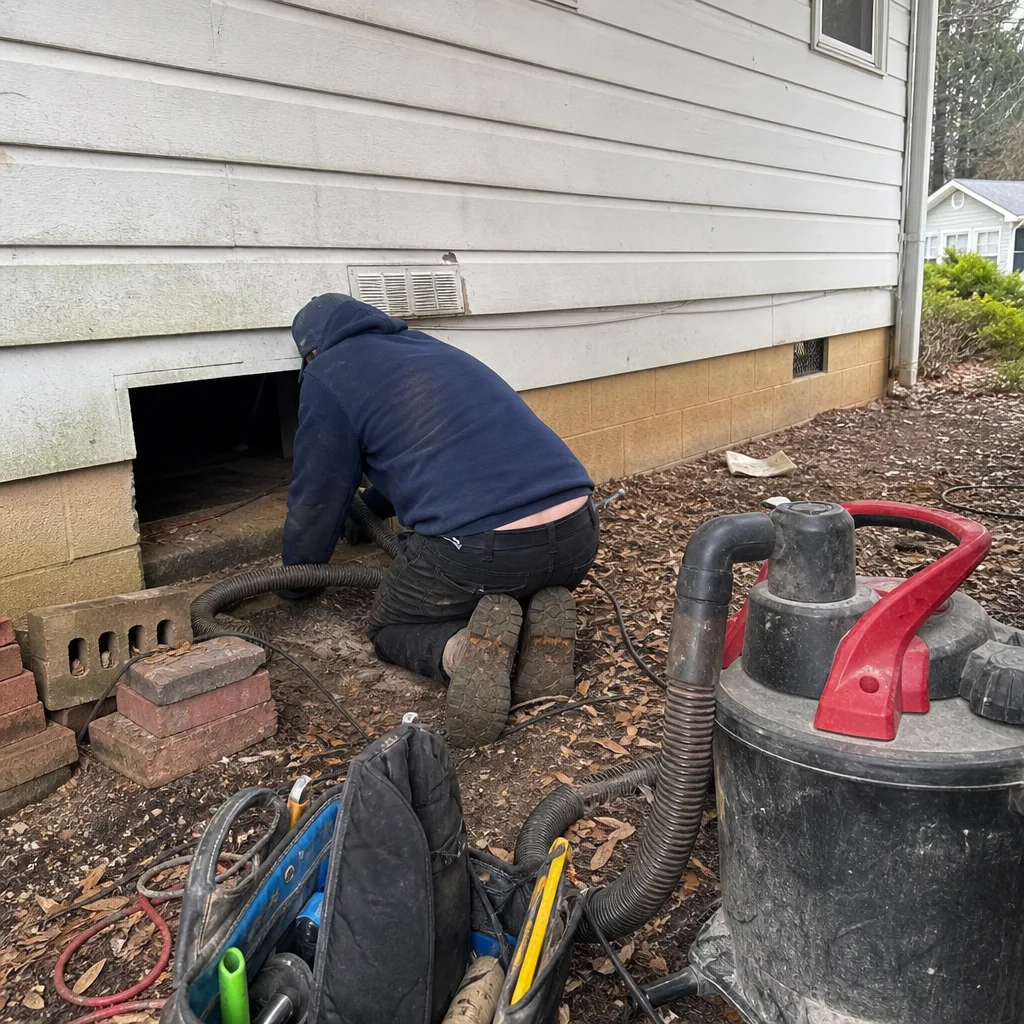 Before
 After
 Before
 After
When to Call a Professional
Call when you’re seeing two or more of the signals in this guide at once. Call immediately when a musty odor persists after startup, when you see staining that suggests a leak you can’t trace, or when renovations ran long with open returns. Those three cases escalate fastest. Call when the tissue test shows two or more starved registers on the same trunk, or when a filter is loading in half its usual time with no other explanation. Air Duct Cleaning Northeast Raleigh offers free estimates in Northeast Raleigh: call (833) 350-5194. We answer 24/7, with fast dispatch from 7am to 7pm, Sunday through Friday. You’ll get a written scope with the exact components covered, before-and-after photos of the work, and a satisfaction guarantee on the job.
Frequently Asked Questions
A typical whole-system duct cleaning in this region is quoted per system, not per vent, and the written estimate you receive is the final price. We don’t quote per-vent rates because they encourage the bait-and-switch pattern you’ve heard about – a teaser coupon on the phone, then a much larger bill once the technician is on site. Ask for one flat price per system, agreed before any work begins, and get photos of your own ducts before and after the visit. Call (833) 350-5194 for an exact quote – estimates are free.
Low quotes are usually low scopes. A cheap price often skips the blower wheel, the coil, the plenum and the return trunks, or it uses a shop-vac-style brush that redistributes dust rather than capturing it. The full air pathway – supply plenum to every register – is where the time goes, and where the price should reflect the work. Ask exactly what components the quote covers, and ask what kind of containment and filtration the crew uses. If it isn’t negative-pressure with HEPA capture (Rotobrush plus Nikro, in our case), the cheaper number is buying less. Call (833) 350-5194 for a straight comparison – estimates are free.
Before-and-after photos of your own ducts, including the blower wheel, coil and plenum. That’s the standard. A technician should be able to show you the before image of each component and the after image of the same component from the same angle. If a company won’t provide that, the work may have been superficial. Another check: a real cleaning usually changes airflow noticeably at the far registers on the day of the visit – if nothing feels different, the far runs likely weren’t touched. Call (833) 350-5194 to schedule a visit with photos included – estimates are free.
Most homes go five to seven years between cleanings under normal conditions, and closer to three or four if you have pets, allergies, or a recent renovation. A home that’s just finished a gut remodel often needs it within a year of completion because of construction dust. The right cadence is more about conditions than the calendar – a filter loading in half its usual time is the better trigger than a schedule. If you’re seeing any of the early signs in this guide, the cleaning is due. Call (833) 350-5194 for a scope recommendation specific to your home – estimates are free.
Yes, in a specific way. Long humid summers keep the coil wet between cooling cycles, and the wet-dry cycle feeds biofilm on the coil and drain pan faster than in drier climates. That shows up first as the startup musty smell described above. Getting to a coil and pan cleaning early is much cheaper than remediation after the growth has migrated into the duct liner. For a walk-through of how the coil and pan fit into the rest of a cleaning visit, see our HVAC cleaning overview. Call (833) 350-5194 – estimates are free.
After, but the system should be sealed during demo. The order matters: covering returns and supplies with plastic before any interior demolition, then a full-scope cleaning once the dust settles. Cleaning during demo wastes the visit because the drywall work continues to load the system. Cleaning a week or two after the final sanding catches the full load. If the work involved flex duct that was moved or reconnected, ask for a duct sealing inspection at the same time – crushed runs and unsealed collars are the two most common renovation failures. Call (833) 350-5194 – estimates are free.
The Bottom Line
The signs that matter in a Northeast Raleigh home are the quiet ones: a register that’s decidedly darker than its neighbors, a starved run confirmed by a tissue test, musty air that spikes at startup and then clears, a filter that loads faster than it used to, drywall dust in a return grille after a remodel. Visible mold and droppings are what you see at the far end – by then, the scope has widened. Catching the early indicators lets you stay in cleaning territory and skip remediation, and it usually means a flat-price-per-system visit with photos, not a coupon-shaped headache. We’ve helped a lot of local homeowners make that distinction. If you’re seeing two or more of these signals, that’s the threshold to call.
Ready to stop guessing? Call Air Duct Cleaning Northeast Raleigh at (833) 350-5194 for a free estimate. We answer 24/7, with fast dispatch from 7am to 7pm, Sunday through Friday. One team covers duct cleaning, dryer vent cleaning, HVAC cleaning, sanitizing and duct sealing, so the whole air pathway gets handled on one visit, with before-and-after photos and a satisfaction guarantee on the work.
Written by the team at Air Duct Cleaning Northeast Raleigh.